Sports and music with braces: what children and parents should know
Braces don't mean giving up football, swimming or the flute. How to protect teeth and appliances during sport and music practice, what to do after a knock.
Article series · Part 11 of 12Braces for kids: a parent's guide
Many children worry that braces will mean a break from football, martial arts or learning a wind instrument. The good news is that most children carry on with their favourite activities throughout treatment. It just takes a little preparation to protect the teeth, lips and appliance, and a short time to get used to it. This article is for parents of children who are busy and have braces.
In short: • Most children keep playing sport and learning instruments throughout treatment; it just takes a little preparation. • For contact sports or activities with a risk of falling, a mouthguard suited to braces is advisable; ask the orthodontist before using a ready-made one. • Wind instruments take a few weeks to get used to; orthodontic wax and short practice sessions help sore lips. • After a knock to the mouth, have the orthodontist check, even if the teeth look fine.
Sport and braces: where is the risk?
When your child wears braces, a knock to the mouth can affect more than the teeth. It can also:
Press the lips and cheeks against the brackets, causing cuts and bleeding.
Knock brackets loose or bend the archwire.
Loosen or break teeth that are in the middle of moving.
Clear aligners do cover the teeth, but they are not designed to protect against impact.
Which sports need more care?
Contact sports or fast balls: football, basketball, volleyball, badminton at close range, martial arts, baseball, hockey.
Risk of falls: cycling, roller skating, skateboarding, indoor climbing.
Lower risk: swimming, running, yoga. Children can still slip, but knocks to the mouth are less common.
Choosing a mouthguard during treatment
For contact sports, your child should wear a mouthguard. A few things differ from usual during orthodontic treatment:
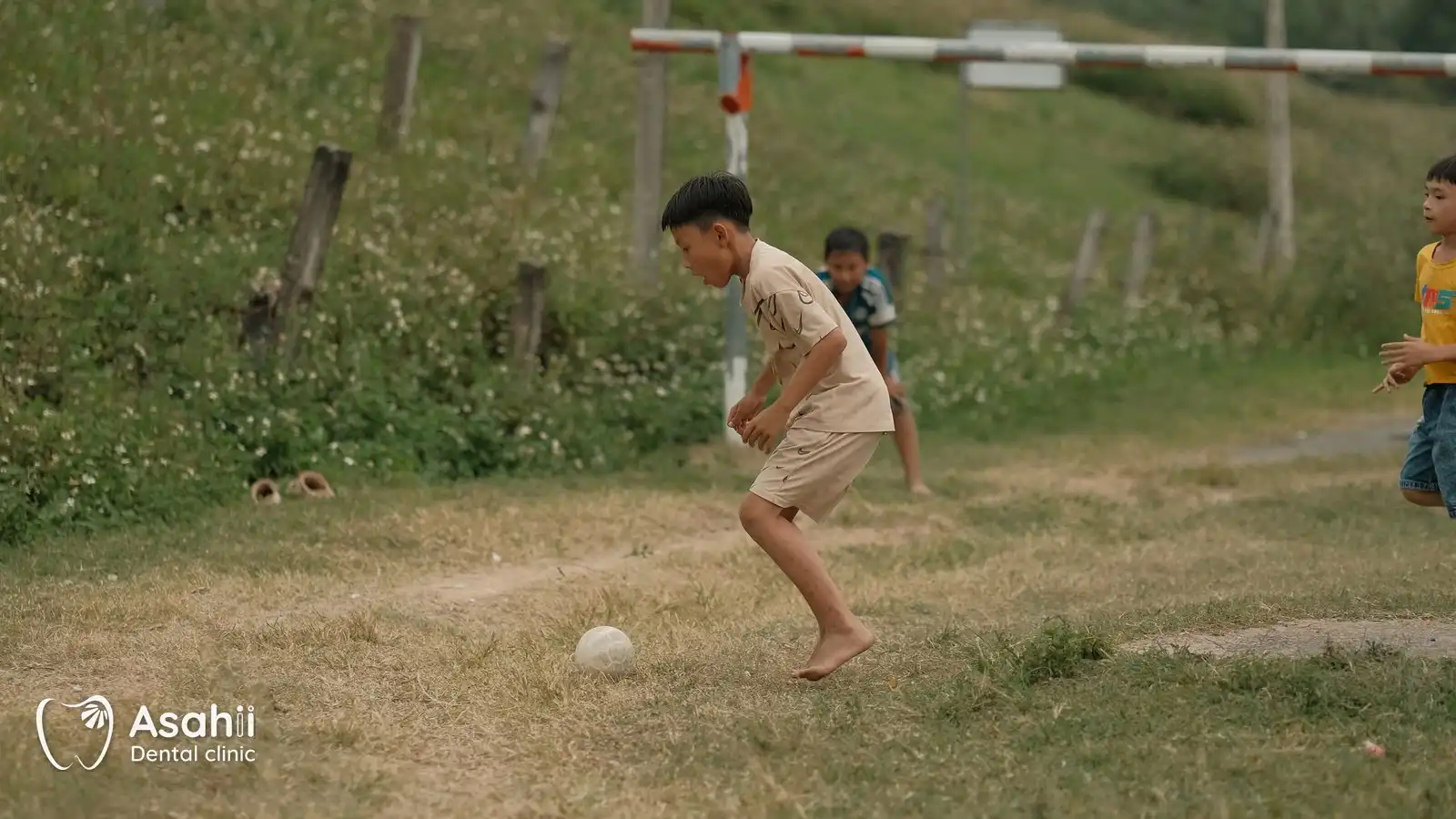
In football and other contact sports lips and cheeks can hit the braces; a mouthguard reduces injuries
The guard needs room for the brackets and should not grip the teeth too tightly, because the teeth are moving. There are guards made for people with braces.
Boil-and-bite guards can mould tightly around brackets, which makes them hard to remove and can get in the way of tooth movement. Ask the orthodontist before using one.
Bring the guard to check-ups so the orthodontist can see whether it still fits.
Rinse the guard after each use and let it dry in a ventilated case.
For some martial arts or high-impact sports, a helmet with a face guard adds protection. If your child wears clear aligners, ask the orthodontist whether to take them out and wear a mouthguard, or whether another approach suits the sport.
Learning an instrument with braces
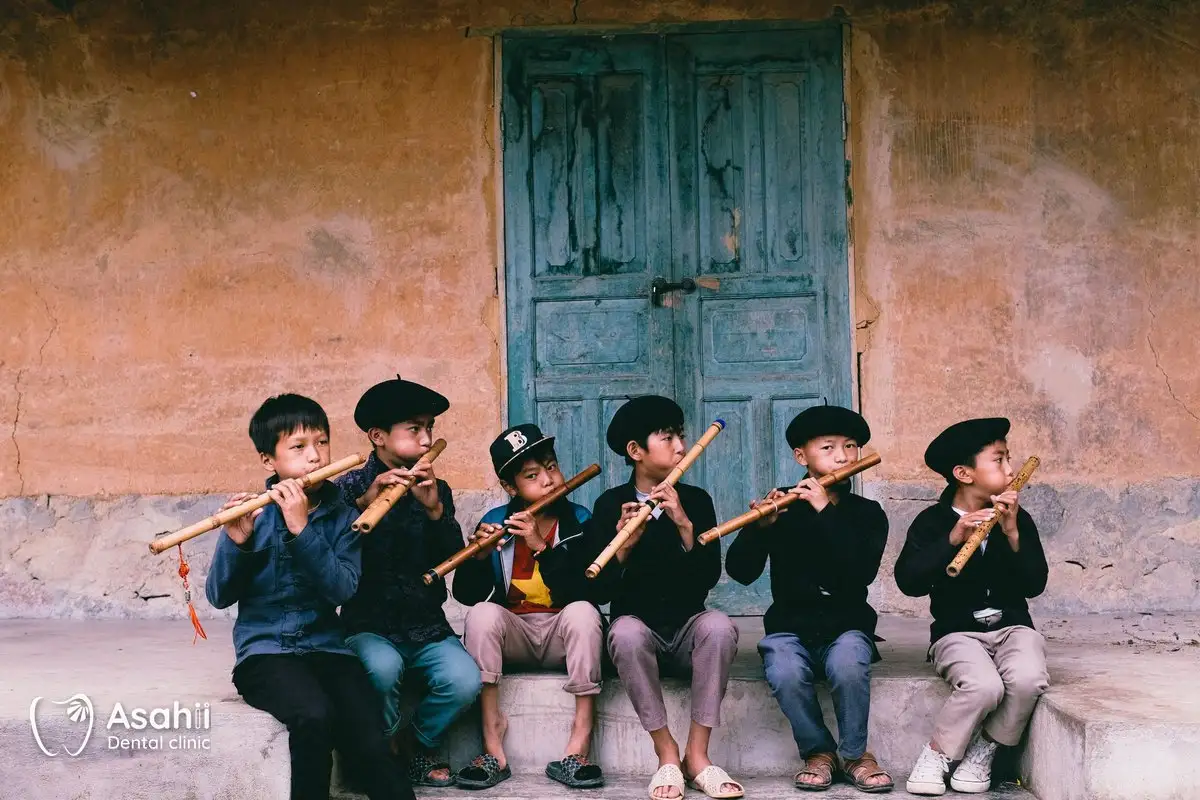
With wind instruments like the flute, children usually need a few weeks to adjust their lips to new braces
This group needs the most adjustment, because the lips press against the teeth when playing.
For the first few weeks the lips may be sore and your child may not play as well as before. Most children adapt gradually.
Wax over the front brackets can reduce rubbing during practice.
Practise in shorter sessions with breaks at first.
If your child has an important performance or exam, tell the orthodontist in advance so the fitting or wire changes can be timed around it. Asahii is open every day of the week, 08:30 to 19:00, so visits can be arranged around practice and exam times.
Other instruments
Piano, guitar, drums and violin are hardly affected. With the violin, resting the chin on the instrument can be uncomfortable while the teeth are tender; let your child take short breaks when needed.
Singing
For the first few days some sounds may come out slightly differently, especially with aligners or a removable appliance. The tongue usually adapts quickly.
Drinks during training
Water first. Energy drinks, soft drinks and sports drinks contain sugar and acid that collect around brackets and can cause white spots and decay.
If your child wears aligners, take them out for anything other than water, and rinse before putting them back in.
Keep a small toothbrush in the sports bag for a quick brush after snacks. The instructions for cleaning around brackets are in the clinic's Zalo Mini App, so your child can look them up on their own.
Tip from Dr. Chu Thuy Trinh: Your child can keep playing sport and music. Use a suitable mouthguard for contact sports, and put removable appliances in their case, never wrapped in a napkin.
If your child takes a knock to the mouth
Check for injuries to the lips, cheeks and tongue. Press clean gauze on any bleeding.
Apply a cold compress on the outside to reduce swelling.
Check whether teeth are loose or broken, brackets loose or the wire bent.
Contact the clinic for a check, even if the teeth look fine. If your child has braces at Asahii Dental Clinic, earlier X-rays and photographs are already in the records, so the orthodontist can compare them to see which teeth were affected.
If a permanent tooth is knocked out, hold it by the crown, not the root, rinse it gently, keep it in fresh milk and go to a dentist straight away. If your child hit their head, feels dizzy, vomits or is bleeding heavily, go to hospital first. See also Brace problems at home.
When to bring your child in straight away
A tooth that is loose, broken or changing colour after a knock.
An appliance that is bent, broken or digging into the cheek or tongue.
A large wound on the lip or cheek, or bleeding that does not stop.
The right protection depends on the sport and the appliance, so ask the orthodontist at the next visit. See our orthodontics and braces page or book a check by hotline 0928 888 121, Zalo or the Mini App.
Frequently asked questions
Does my child have to stop sport during treatment?
Usually not. Most children carry on as normal. For contact sports, wear a mouthguard suitable for braces.
Can clear aligners replace a mouthguard?
Aligners should not be treated as protection. Ask the orthodontist how best to protect the teeth for your child's sport.
My child's lips hurt playing the flute after the braces went on. What can we do?
Put wax over the front brackets and practise in shorter sessions for the first few weeks. If a sore on the lip is slow to heal, have the orthodontist look at it.
Does swimming in a pool affect braces?
Swimming is low risk for braces. Rinse with clean water afterwards and take care getting in and out of the pool to avoid knocks.
This article is general information reviewed by our dentist; it is not a diagnosis. Only an examination can say what your teeth need.
Was this article helpful?
Tap a star — 1 is not helpful, 5 is very helpful.
Thank you! Your rating helps us write better.
Could not send right now — please try again later.
How parents can handle brace problems at home, from poking wires and loose brackets to lost elastics and cracked aligners, and when to call the clinic.
A practical guide to oral hygiene with braces: the first days, food to limit, brushing around brackets, useful tools and what to do when a bracket comes loose.
· 4 min read·
Book a visit
Book a orthodontics & braces consultation
Leave your phone number – our front desk will call you back to find a time that suits you.