Choosing an orthodontist for your child: what parents should ask
Tips for parents choosing where their child will have braces: orthodontic training, records, questions to ask at the consultation and signs to think twice.
Article series · Part 6 of 12Braces for kids: a parent's guide
Orthodontic treatment for a child often lasts a few years, with dozens of visits. So choosing who will see your child through it is not just about a clinic close to home; it is about an orthodontist you trust and your child feels comfortable with. This article suggests what parents can look into and which questions to ask at the consultation, so you can make the decision that suits your family.
In short: • Braces for a child last a few years, so look for an orthodontist with specialist training who examines, plans and follows your child in person. • A proper consultation includes a history, an examination, records with X-rays and photos, an explanation and a written plan. • Be cautious about promised results, pressure to decide quickly, or appliances suggested before any X-rays. • A second opinion is normal, and don't forget to ask your child what they think.
Why look for an orthodontist with specialist training?
Orthodontics is a field of its own within dentistry. Besides moving teeth, the orthodontist has to assess how the jaws are growing, choose the right moment to treat a child, and predict how the teeth will change over many years. That takes specialist training and experience.
Parents can ask:
Where, and for how long, the orthodontist trained in orthodontics.
Whether the scope of practice on the doctor's licence includes orthodontics.
Whether the orthodontist regularly treats children, especially children who are still losing baby teeth.
Who will personally examine, plan and follow your child throughout treatment.
A serious clinic will be happy to answer these questions. For example, at Asahii Dental Clinic orthodontics is led by Dr. Chu Thuy Trinh, the medical director, who examines, plans and follows each case in person; for clear aligners, Dr. Trinh holds Invisalign certification (2023) and has completed the Invisalign Enhanced Course (2025).
What should an orthodontic consultation include?
A serious treatment plan cannot come from a few minutes of looking at the teeth. Usually the orthodontist will:
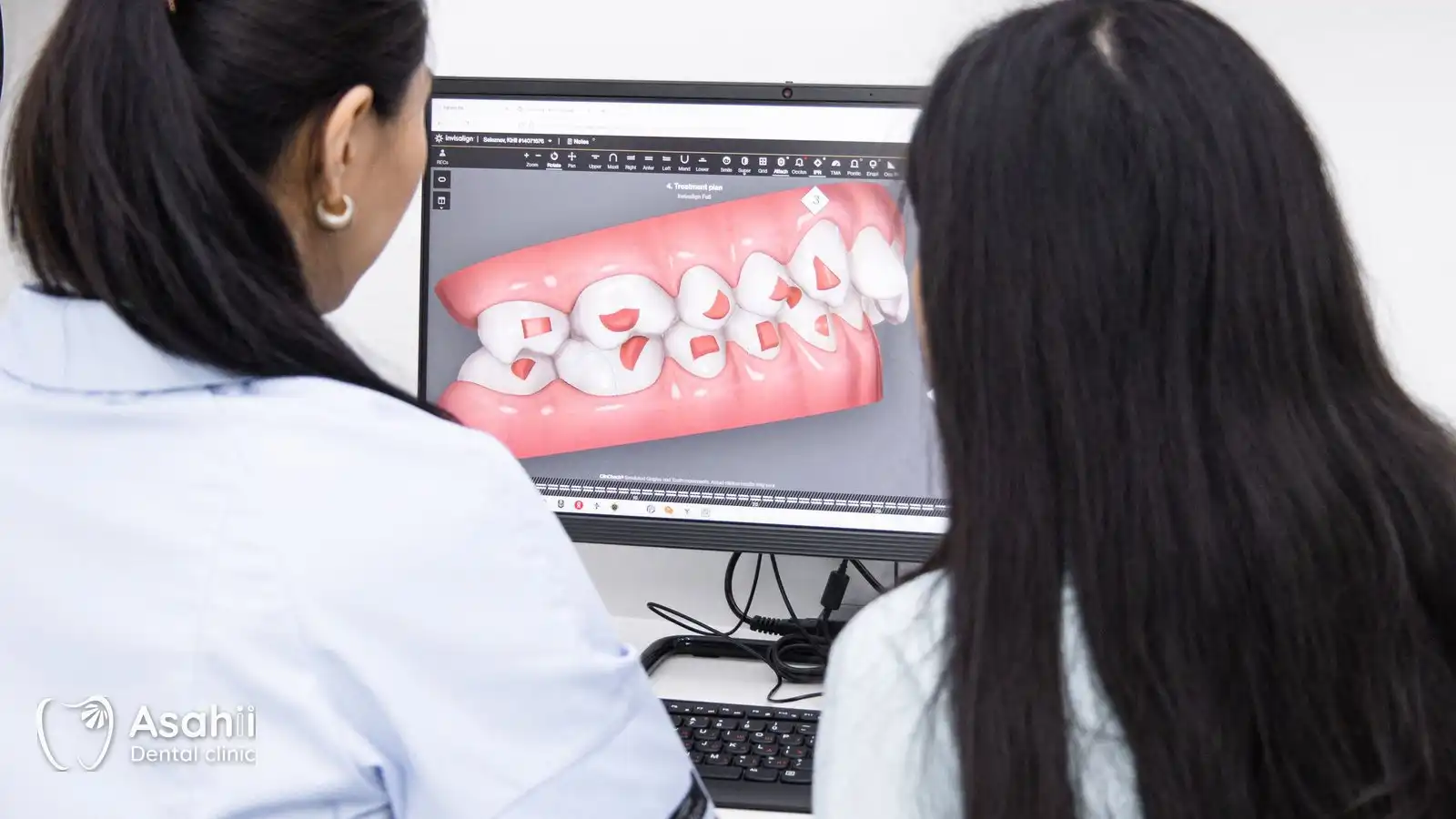
The first consultation is the time to ask about the diagnosis, options, timing and cost
Take a history: general health, habits, how your child breathes and sleeps, previous dental treatment.
Examine the mouth and face, from the front and in profile.
Take orthodontic records: a panoramic X-ray, a lateral skull X-ray, photographs of the face and teeth, and impressions or a digital scan. Ask whether these records are kept to compare between visits and whether the family can see them; at Asahii, the X-rays and photographs are stored in your child's records on the clinic's system.
Analyse and explain: what the problem is, whether it comes from the teeth or the jaws, and whether to treat now or monitor.
Present the plan in writing: the goals, the proposed appliance, the estimated duration, the items and their costs.
What problem does my child have? What could happen if it is not treated?
Is the problem in the teeth or in the jaws?
Is it better to treat now or wait? Why?
About the treatment plan
What are the options? What are the pros and cons of each?
Will teeth need to be taken out? If so, why?
How long is treatment expected to take? What could make it longer?
How often are the check-ups, and how long does each take?
About costs and commitments
What items do the costs include? Are there extra charges if the plan changes?
How does the clinic handle loose, broken or damaged appliances?
After the braces come off, how are retainers and follow-up arranged?
About support along the way
If something goes wrong between appointments, who should the family contact, and how?
Can the family follow appointments and progress? (At Asahii, appointments and the treatment plan can be viewed in the Zalo Mini App, including the records of a child under 16 for whom the parent is guardian.)
Write the answers down. If anything is unclear, ask again. A good orthodontist explains in plain language for both parents and child.
Signs to think twice
Be more cautious if you come across situations such as:
Being offered an appliance straight away, without X-rays or analysis.
Being promised a certain result or time, or a "guarantee that it won't relapse".
Not being told clearly what the options are.
Being pushed to decide quickly because an offer is about to end.
No clear plan for the period after the braces come off.
Orthodontics is medical treatment. Every appliance, clear aligners included, needs an orthodontist to examine, plan and follow it in person. Avoid "do-it-yourself" aligner kits or devices sold online.
Is it all right to ask for a second opinion?
Absolutely. For a decision that lasts several years, consulting another orthodontist is reasonable, especially when extractions or early treatment are proposed. You can ask for copies of the X-rays and records to take with you.
Don't forget your child's opinion
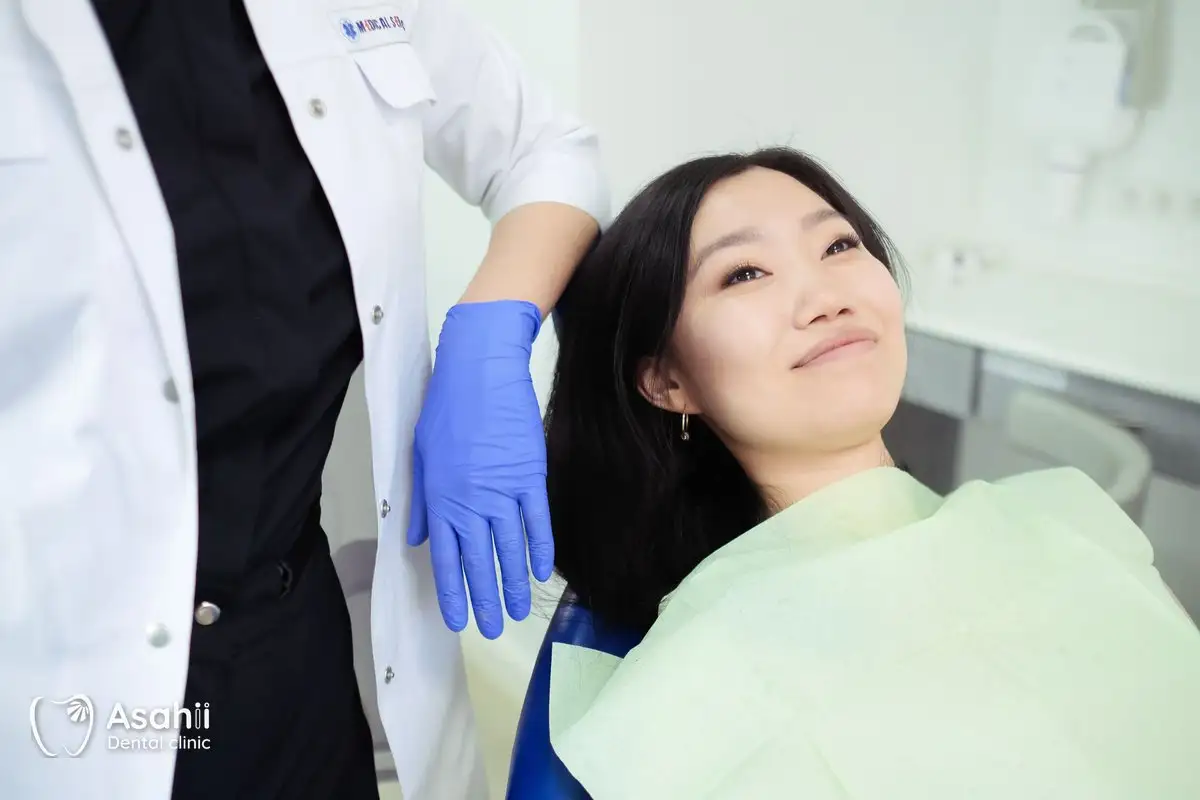
Your child is the one who wears the appliance, goes to the check-ups and cleans their teeth every day. Let your child join the consultation, ask questions and say what worries them. When children feel at ease with the orthodontist, they usually cooperate better throughout treatment.
Braces last many months, so a child feeling at ease with the doctor matters as much as expertise
Tip from Dr. Chu Thuy Trinh: Ask the doctor why this treatment suits your child, and what happens if you wait. A good plan can always answer both questions.
At Asahii Dental Clinic, the orthodontic plan is made after the examination and full records, and is presented in writing so the family can read it and ask questions before anything starts. See our orthodontics and braces page or book a consultation for your child by hotline 0928 888 121, Zalo or the Mini App.
Frequently asked questions
Can a general dentist provide braces for children?
It depends on each dentist's training and scope of practice. Parents should ask clearly whether the dentist has specialist training and regularly treats children orthodontically.
What should we bring to the first consultation?
Bring any previous X-rays, dental records and a list of medicines your child takes. Write your questions down beforehand so you don't forget them.
Two orthodontists suggested two different plans. What should we do?
An orthodontic case can often be approached in more than one way. Ask each orthodontist why they chose their approach and what the pros and cons are, then choose the plan your family understands and trusts most.
Should we choose the cheapest option?
Cost matters, but compare what is included too: records, appliances, check-ups, repairs, retainers and follow-up after treatment.
This article is general information reviewed by our dentist; it is not a diagnosis. Only an examination can say what your teeth need.
Was this article helpful?
Tap a star — 1 is not helpful, 5 is very helpful.
Thank you! Your rating helps us write better.
Could not send right now — please try again later.
When a child should have a first orthodontic check, signs in the teeth, jaws and habits that parents can notice at home, and what the first visit involves.