
Orthodontics & braces
How long do braces take? The stages of orthodontic treatment
How long braces take, the stages of a course of orthodontic treatment, what makes it longer or shorter, and how to keep your treatment on schedule.
· 4 min read ·

Orthodontics & braces
Metal braces, ceramic braces and clear aligners compared on appearance, hygiene, appointments and suitability, and how your orthodontist chooses.

When deciding on orthodontic treatment, many people weigh three familiar options: metal braces, ceramic braces and clear aligners. All three move teeth on the same principle, a light and steady force on the teeth. The differences are in how they look, how you clean around them, how often you are seen, and which cases each suits. This article explains each one before you talk to your orthodontist.
The longest-established and most widely used appliance. Metal alloy brackets are bonded to the outer surface of the teeth and joined by an archwire, held with small elastics or by a clip (self-ligating brackets). At Asahii Dental Clinic both metal and ceramic braces are available as Damon self-ligating systems.

Ceramic braces work like metal ones but the brackets are ceramic or a clear material close to tooth colour, so they are less noticeable up close.
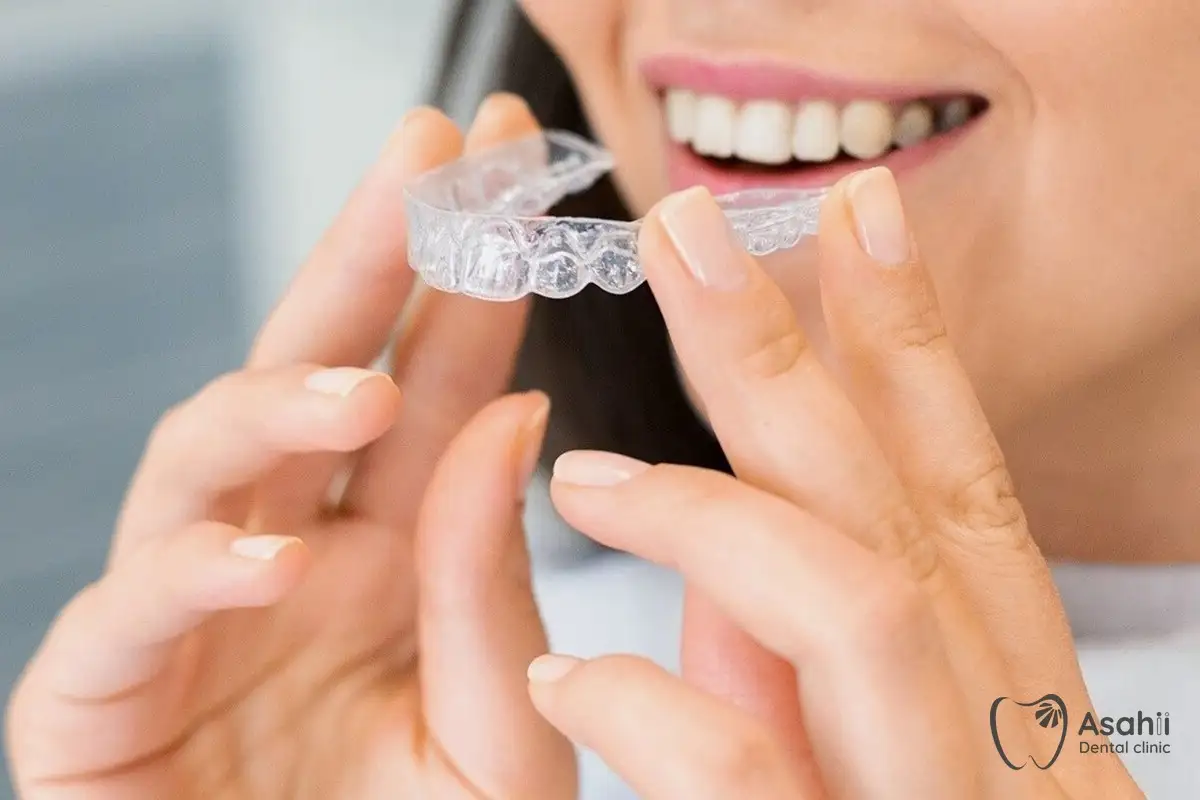
Clear aligners (Invisalign, for example) are a series of thin plastic trays designed from a digital plan. Each tray moves the teeth a small step; you change trays on a schedule, usually every one to two weeks. Asahii treats with Invisalign, including Invisalign First for children; Dr. Chu Thuy Trinh is Invisalign certified (2023) and completed the Invisalign Enhanced Course in 2025.
It is not only a matter of preference. Your orthodontist considers:
So the same wish, "I want clear aligners", may be agreed straight away for one person, while another is advised to use braces, or to combine both at different stages. At Asahii the doctor explains your situation in detail, sets the options side by side and gives a clear price for each before you decide; nothing starts until you have confirmed the plan.
Whatever the appliance, contact the clinic early if a bracket comes loose, a wire pokes your cheek, a tray cracks, or pain or swollen gums last more than a few days.
The right appliance can only be decided after an examination and X-rays. Reference prices for each option are on our orthodontics and braces page; book a consultation by hotline 0928 888 121 or the Zalo Mini App so a doctor can compare the options for your own case.
Many mild to moderate cases can be treated with aligners. For complex cases the orthodontist may suggest braces, or aligners combined with auxiliary appliances. Only an examination and X-rays give a definite answer.
Ceramic brackets are bulkier and can chip more easily if you bite hard food, but used properly they treat most of the same cases as metal braces.
In some cases it is possible at a later stage, depending on the treatment plan. Discuss it with the orthodontist following your case.
Treatment time depends mainly on your teeth and on keeping appointments and wearing the appliance as instructed, not much on the type of appliance.
This article is general information reviewed by our dentist; it is not a diagnosis. Only an examination can say what your teeth need.
Tap a star — 1 is not helpful, 5 is very helpful.
Thank you! Your rating helps us write better.
Could not send right now — please try again later.Leave your number — reception calls back to agree a time. The dentist explains and quotes before any treatment.
How long braces take, the stages of a course of orthodontic treatment, what makes it longer or shorter, and how to keep your treatment on schedule.
· 4 min read ·

A practical guide to oral hygiene with braces: the first days, food to limit, brushing around brackets, useful tools and what to do when a bracket comes loose.
· 4 min read ·

What retainers are, why teeth drift back after braces, the types of retainer, how long to wear them, how to clean them and what to do if one breaks or is lost.
· 4 min read ·
Book a visit
Leave your phone number – our front desk will call you back to find a time that suits you.