Asahii Dental clinic
+84 928 888 121 Book a visit

Orthodontics & braces

After braces: why you need to wear retainers

What retainers are, why teeth drift back after braces, the types of retainer, how long to wear them, how to clean them and what to do if one breaks or is lost.

A smile after braces come off: wearing a retainer keeps the teeth in their new position

The day your braces come off is a happy one, but it is not the finish line. Teeth that have just been moved need time for the bone and the ligaments around their roots to settle. During that time, if nothing holds them, they tend to drift back towards where they were. That is exactly what a retainer does: it holds the teeth where the orthodontist placed them until everything is stable.

Why teeth drift back

  • The bone around the roots is not yet dense. As a tooth moves, bone is removed on one side and formed on the other. New bone takes months to mature.
  • Ligaments and gum fibres have a "memory". The tissue fibres around the teeth are stretched during treatment and tend to pull back, especially around teeth that were rotated.
  • Pressure from the lips, cheeks, tongue and habits. Tongue thrusting, lip sucking and mouth breathing keep acting on the teeth after the braces are gone.
  • Natural change with age. Lower front teeth tend to crowd slowly over the years, even in people who never had braces.

For these reasons orthodontists treat retention as part of the treatment, not an optional extra.

Types of retainer

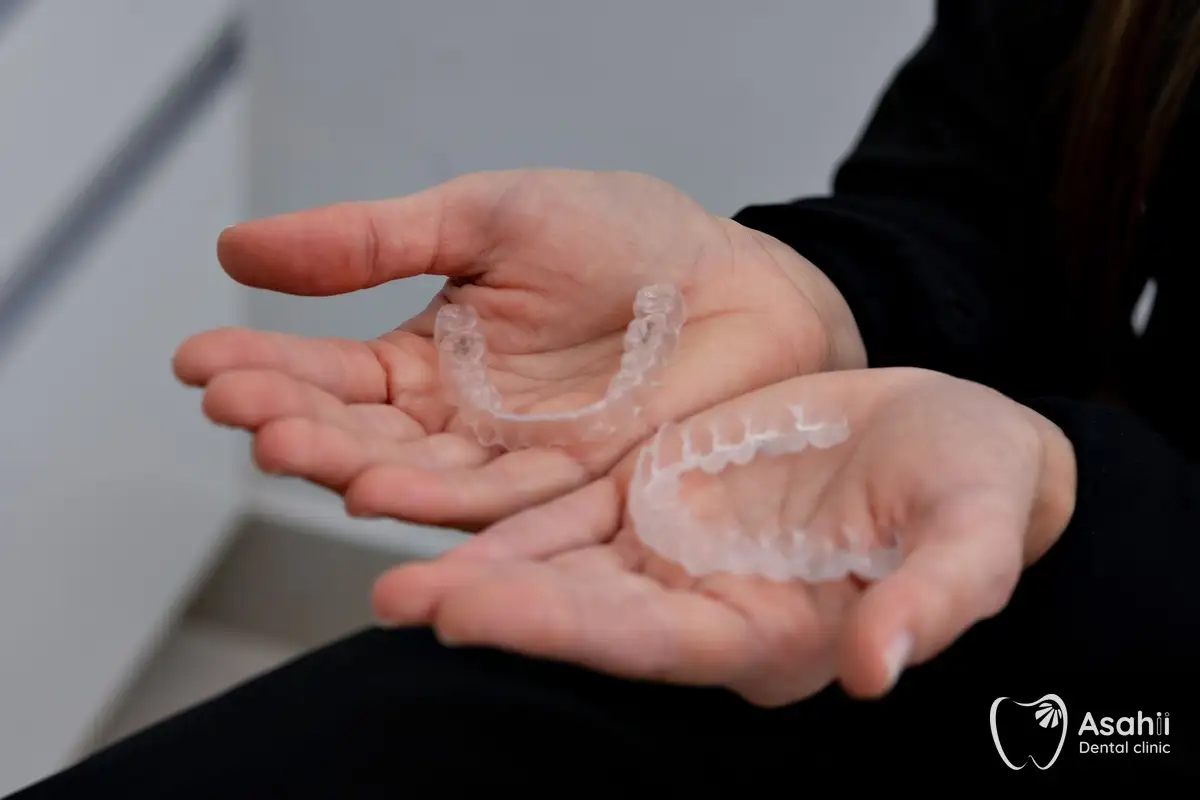
A clear retainer tray, one of the kinds of retainer worn after braces
  • Clear retainer (plastic tray): made from a mould of your teeth after the braces come off, transparent and removable. Discreet and easy to clean, but it can wear or crack over time and need remaking. Asahii Dental Clinic makes both standard clear retainers and Invisalign's Vivera retainers.
  • Hawley retainer: an acrylic plate against the palate with a metal wire across the front teeth. Durable and adjustable, but the wire shows when you smile and it takes a few days to speak normally.
  • Fixed (bonded) retainer: a thin wire bonded to the inside of the front teeth, usually the lower ones. Nothing to remember, but it needs special floss to clean and periodic checks that it is still bonded.

Many people are given a combination, for example a bonded wire on the lower teeth and a removable tray for the upper. The choice depends on the original problem, the risk of relapse and your habits.

How long to wear it

Your orthodontist sets the schedule for your case, but a common pattern is:

  • At first (often the first several months to a year): wear it almost all day, removing it only to eat and brush.
  • Later: move to nights only.
  • Long term: many orthodontists advise continuing to wear it at night a few nights a week, for as long as possible, because teeth can shift slightly throughout life.

Stopping early is the most common reason teeth become crowded again after braces. At Asahii, Dr. Chu Thuy Trinh writes the wearing schedule and the review dates after debonding into your treatment plan; that record is kept in the clinic's system and can be viewed in the Zalo Mini App, so if you forget, you look it up rather than guess.
Cleaning your retainer

Two clear retainers: rinse them every day and keep them in their case when not worn
  • Removable trays: brush with a soft brush and cool water or mild soap every day. No hot water, and do not soak for long in mouthwash containing alcohol. Retainer cleaning tablets can be used as directed.
  • Hawley retainers: brush as above; never bend the wire.
  • Bonded wires: use floss with a stiff end or an interdental brush under the wire every day; have regular scaling because tartar collects around the wire.
  • Always put the tray in its case when it is out. Many trays are lost in napkins at restaurants.
  • Keep it away from pets and heat (a car in the sun).

If the retainer breaks or is lost

  • The tray is cracked, loose or no longer fits snugly: contact the clinic to have it remade soon. Keep wearing it in the meantime if it still goes in.
  • The tray is lost: call straight away. After a few weeks without it, the teeth may have moved enough that a tray made from the old mould no longer fits.
  • The bonded wire has come off at one end: do not remove it yourself; come in to have it re-bonded or replaced.
  • It feels tight or sore when you put it back in: the teeth have shifted slightly. Wearing it continuously for a few days usually brings them back; if it will not go in at all, the doctor needs to check.

When to see us straight away

  • A tray or bonded wire that has broken or come loose and is catching or hurting.
  • A loose tooth, or swollen and painful gums around the bonded wire.
  • A retainer you cannot get in after several days of trying.
  • Front teeth starting to crowd or rotate again.

The right type and duration of retention can only be set after a doctor has examined you. The retainers we offer are listed on our orthodontics and braces page; book a check-up by hotline 0928 888 121 or Zalo if your retainer has a problem; the clinic is open every day of the week, 08:30 to 19:00, so a retainer lost at the weekend does not have to wait.

Frequently asked questions

Does it matter if I forget my retainer for a few days?

A few days usually do no harm; put it back in straight away. If it feels tight or will not go in, contact the clinic to have it checked.

Do I have to wear a retainer for life?

Many orthodontists advise wearing it at night long term, because teeth can shift slightly with age. The exact schedule is set by your doctor for your case.

Does a bonded retainer damage the teeth?

The wire itself does not, but tartar and plaque collect around it if it is not cleaned well. Floss under the wire and have regular scaling.

My retainer has turned yellow. What can I do?

Brush it well with a soft brush and mild soap, or use retainer cleaning tablets. Avoid hot water and strong cleaning agents. If it is badly stained or smells, ask your doctor about a new tray.

This article is general information reviewed by our dentist; it is not a diagnosis. Only an examination can say what your teeth need.

Was this article helpful?

Tap a star — 1 is not helpful, 5 is very helpful.

Share: Facebook Email

Considering orthodontics & braces?

Leave your number — reception calls back to agree a time. The dentist explains and quotes before any treatment.

Related services

Read next

A smiling young woman in metal braces: eating well and cleaning properly keep orthodontic treatment on track
Oral care at home

Eating and oral hygiene with braces

A practical guide to oral hygiene with braces: the first days, food to limit, brushing around brackets, useful tools and what to do when a bracket comes loose.

· 4 min read ·

Book a visit

Book a orthodontics & braces consultation

Leave your phone number – our front desk will call you back to find a time that suits you.

Request an appointment

Our front desk will call you back to find a suitable time. Your details are protected under our privacy policy.