
Orthodontics & braces
How long do braces take? The stages of orthodontic treatment
How long braces take, the stages of a course of orthodontic treatment, what makes it longer or shorter, and how to keep your treatment on schedule.
· 4 min read ·

Oral care at home
A practical guide to oral hygiene with braces: the first days, food to limit, brushing around brackets, useful tools and what to do when a bracket comes loose.

Braces change two things you do every day: eating and brushing. Brackets and wires create many corners where food collects, and clear aligners have to come out for every meal. Looking after your teeth properly keeps teeth and gums healthy throughout treatment, prevents the white decalcified spots around brackets, and saves you from pausing treatment to treat decay.
For a few days after brackets are fitted or a new tray is started, teeth feel sore and tender when biting. Cheeks and lips may rub. This is normal and settles within about a week.
If you are treated at Asahii Dental Clinic, the care guide for the days after your braces are fitted is in the clinic's Zalo Mini App, so you can look it up at any time instead of trying to remember everything said in the chair.

With clear aligners you remove the trays to eat, so you can eat almost normally. Drink only plain water while wearing trays; tea, coffee and soft drinks stain the trays and cause decay underneath them.
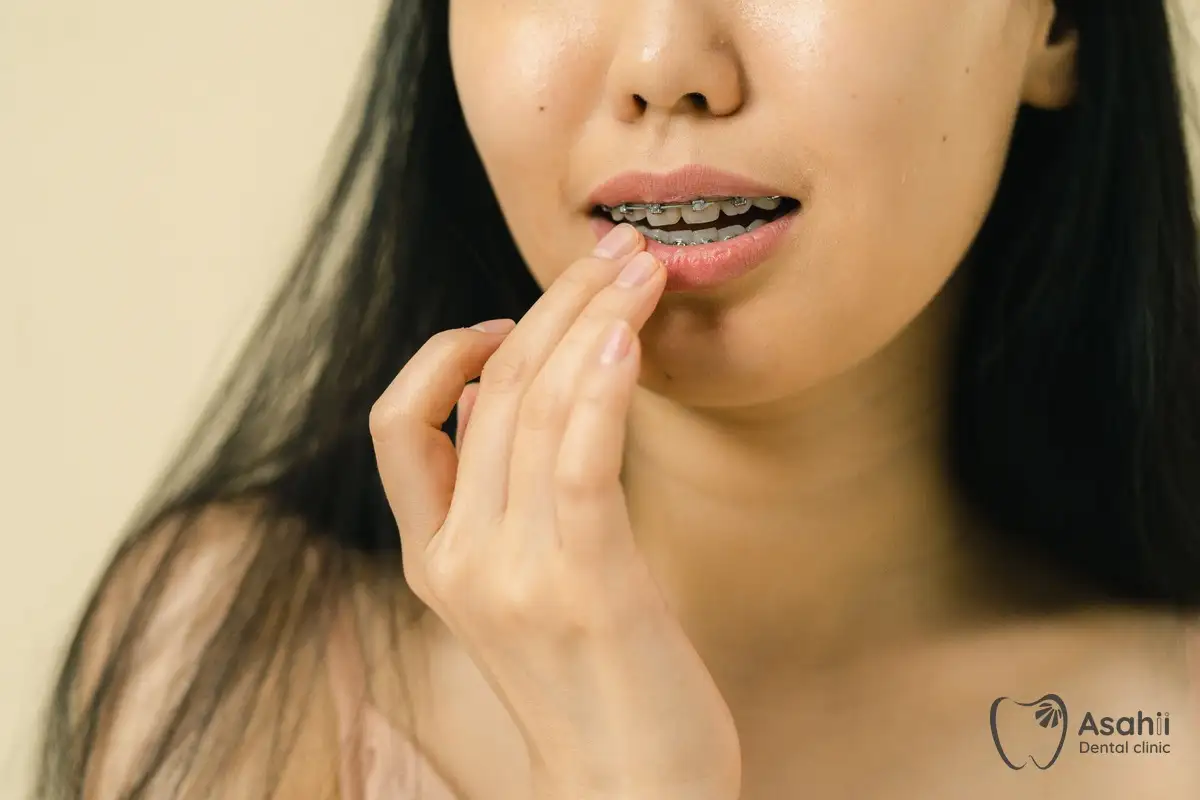
With clear aligners: brush your teeth, and brush the trays with a soft brush and water. Never use hot water, which can warp the trays.
Every time a bracket stays off for a while, that tooth can stop moving for weeks and the whole treatment gets longer. Asahii is open every day of the week, 08:30 to 19:00, so a bracket that comes off at the weekend can be re-bonded without waiting for Monday.
The specific care routine depends on your appliance, so follow the instructions given when it was fitted. See our orthodontics page or book a check-up by hotline 0928 888 121, Zalo or the Mini App if something needs looking at.
Not completely, but keep them occasional and brush or rinse straight afterwards. Sugar around brackets causes decay and white spots very quickly.
Yes. Tartar builds up faster around brackets. The orthodontist usually combines a professional clean with your regular visits, or books a separate appointment.
It is a good help, but brushing and flossing remain the foundation. Use all three if you can.
Cover it with wax, eat soft food and message the clinic for an early slot; Asahii works on Saturdays and Sundays too, so you usually do not have to wait for the next week. If a wire is causing a lot of pain, call the hotline for advice.
This article is general information reviewed by our dentist; it is not a diagnosis. Only an examination can say what your teeth need.
Tap a star — 1 is not helpful, 5 is very helpful.
Thank you! Your rating helps us write better.
Could not send right now — please try again later.Leave your number — reception calls back to agree a time. The dentist explains and quotes before any treatment.
How long braces take, the stages of a course of orthodontic treatment, what makes it longer or shorter, and how to keep your treatment on schedule.
· 4 min read ·

Metal braces, ceramic braces and clear aligners compared on appearance, hygiene, appointments and suitability, and how your orthodontist chooses.
· 4 min read ·

How to brush properly, choose a brush and toothpaste, use floss and a water flosser, and the common mistakes in everyday oral hygiene.
· 4 min read ·
Book a visit
Leave your phone number – our front desk will call you back to find a time that suits you.