Mouth breathing and snoring in children: what do they have to do with teeth and jaws?
Long-term mouth breathing and snoring in children can be linked to how the jaws develop. Signs to watch for, who to see first and how a dentist can help.
Article series · Part 4 of 12Braces for kids: a parent's guide
Many parents notice their child sleeping with the mouth open or snoring, and put it down to tiredness or a cold. If it only happens now and then, when the nose is blocked, it is usually nothing to worry about. But when mouth breathing becomes an everyday habit lasting many months, it can affect both sleep and the way the jaws and teeth develop. This article explains the link and what parents can do.
In short: • Occasional mouth breathing with a blocked nose is usually nothing to worry about; everyday mouth breathing lasting months can affect sleep and how the jaws and teeth develop. • The cause usually lies in the nose and throat (allergy, adenoids, tonsils), so your child should see a paediatrician or ENT doctor first. • A dentist can spot the signs in the teeth and arches and consider expansion when needed, but this does not replace treating the cause. • Loud snoring with pauses in breathing is a reason to have your child seen soon.
Why is breathing linked to the teeth and jaws?
When a child breathes through the nose with the lips closed, the tongue rests against the palate. That position gives a gentle, steady push from the inside, which helps the upper arch grow wide.
When a child breathes through the mouth, the mouth is always slightly open and the tongue drops to the floor of the mouth. The support from the tongue is lost while the cheeks still press from both sides. If this continues during growth, it may contribute to:
A narrow upper arch and a high palate.
Crowded teeth and a crossbite at the back.
Upper front teeth sticking out and lips that are hard to close.
A tendency towards a longer face.
Mouth breathing is only one of several factors that can contribute to these problems, and not every mouth-breathing child develops them. But it is something an orthodontist always asks about when examining a child.
Common reasons children breathe through the mouth
Allergic rhinitis or a nose that stays blocked.
Enlarged adenoids or tonsils.
A deviated nasal septum.
A habit left over after a long period of nasal blockage, even once the nose is clear.
Most of these causes belong to ear, nose and throat (ENT) or paediatric medicine, not dentistry. So finding and treating whatever is blocking the airway is the first step.
Signs parents should look out for
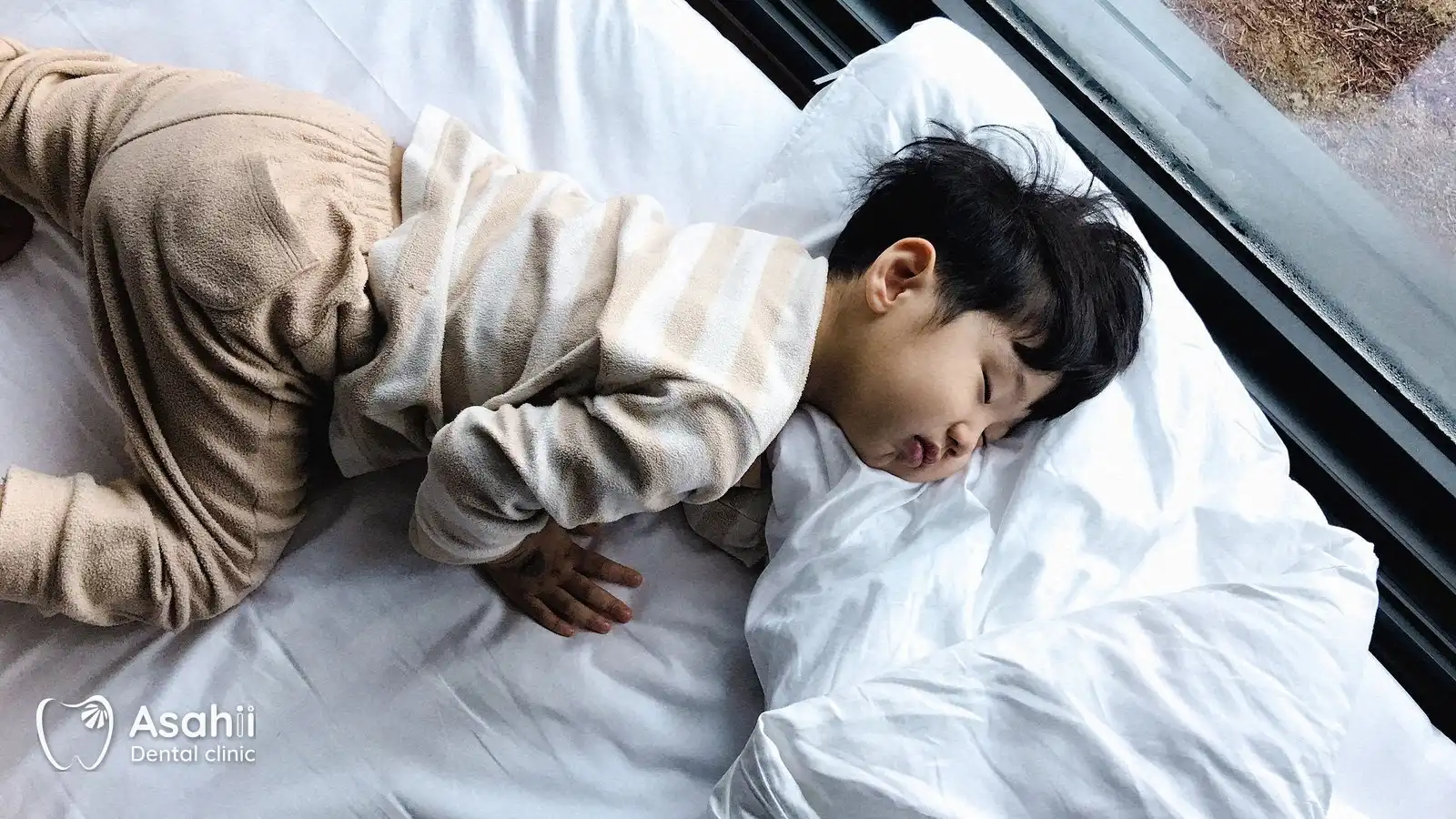
Watch your child asleep: an open mouth, loud snoring or a lot of tossing are reasons to get checked
At night
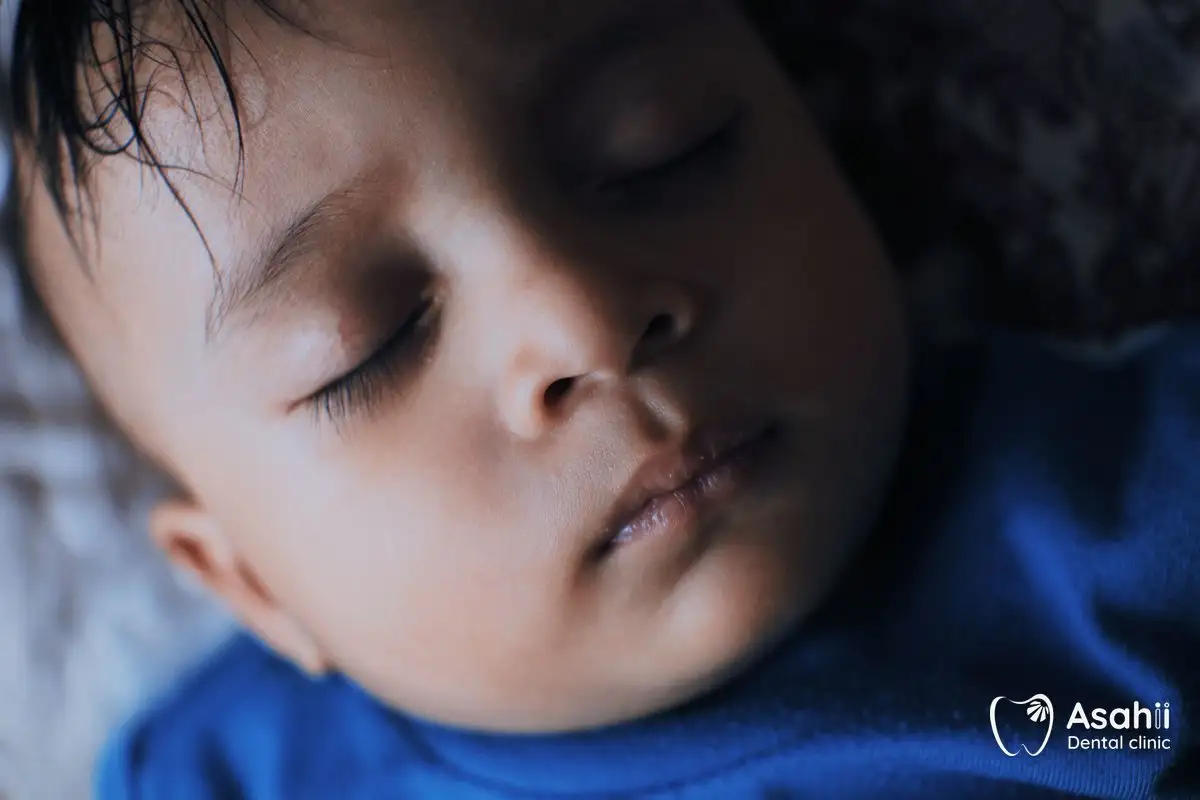
Sleeping with the mouth open, snoring regularly, not only during a cold.
Moments when breathing seems to stop, followed by a gasp or a start.
Restless sleep, frequent changes of position, heavy sweating.
Bedwetting returning in an older child.
During the day
The mouth often hanging open while watching TV or concentrating.
Dry, cracked lips; bad breath.
Tiredness, sleepiness, poor concentration, or the opposite: hyperactivity and irritability.
In the teeth and face
Crowded teeth even at a young age.
Prominent upper front teeth, a short upper lip, difficulty closing the lips naturally.
Gums around the upper front teeth that are often red and swollen.
If your child snores loudly with pauses in breathing, take them to a paediatrician or ENT doctor soon, as this may be a sign of a sleep-related breathing disorder that needs specialist assessment.
How can a dentist or orthodontist help?
Dentists do not diagnose or treat airway diseases. But during a dental examination the dentist can:
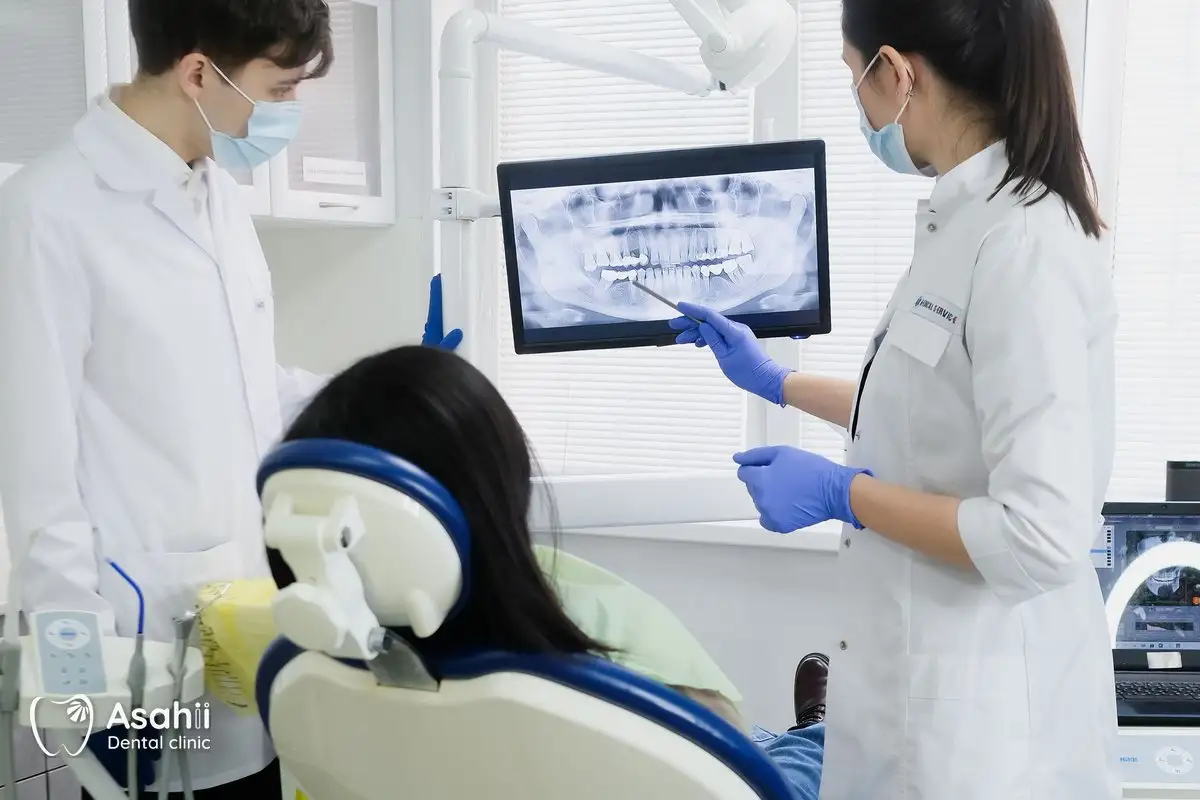
X-rays help the dentist see whether a narrow arch or bite problem is linked to mouth breathing
Spot signs of mouth breathing in the teeth, arches and face, and advise you to see the right specialist.
Assess the arches: if the upper arch is narrow or there is a crossbite, in a growing child the orthodontist may consider expansion, one of the growth-guidance appliances Asahii Dental Clinic uses for children.
Help break habits such as tongue thrusting, and train the correct resting position of the tongue and lips.
Monitor together with the ENT doctor or paediatrician to choose the right moment to intervene. At Asahii, photographs and X-rays of your child's arches are kept in the records, so at the next visit the doctor can compare how the arch has changed, and you can take them along to other specialists.
To be clear: expansion or orthodontic treatment does not replace treating the cause in the nose and throat, and not every child who snores or breathes through the mouth needs orthodontic treatment. The decision is always based on an examination, X-rays and the opinion of the other specialists involved.
Tip from Dr. Chu Thuy Trinh: If your child often breathes through the mouth or snores, see an ear, nose and throat doctor first. Watching the teeth and jaws makes most sense once the airway has been checked.
What parents can do at home
Note a few nights: does your child snore, are there pauses in breathing? A short video of your child asleep helps the doctor understand.
Keep the bedroom clean and low in dust, and limit allergy triggers.
Gently remind your child to close the lips when you see the mouth open during the day, without scolding.
Do not use mouth tape or devices bought online for children without asking a doctor first.
Choose an appointment time when your child is alert. Asahii is open every day of the week, 08:30 to 19:00, so you can come at the weekend.
When to bring your child in straight away
Loud snoring with pauses in breathing during sleep.
Difficulty breathing, noisy breathing, or a blocked nose that does not improve.
Unusual tiredness or sleepiness during the day, or falling behind at school.
Every child breathes through the mouth for different reasons, and only an examination can show whether the teeth and jaws are affected. If you would like your child's teeth and arches checked, book a visit by hotline 0928 888 121, Zalo or the Mini App, or see our orthodontics and braces page.
Frequently asked questions
My child only sleeps with the mouth open during a cold. Is that a problem?
Breathing through the mouth while the nose is blocked is normal. What deserves attention is regular mouth breathing, even when your child is well, lasting for months.
Should we see a dentist or an ENT doctor first?
If your child snores loudly, has pauses in breathing or a nose that stays blocked, see a paediatrician or ENT doctor first. A dental check adds an assessment of the arches and bite; the two can work together.
Can expansion cure snoring?
Expansion is used to correct a narrow arch and a crossbite. It is not a treatment for snoring and does not replace treating the cause in the nose and throat.
My child still breathes through the mouth after adenoid or tonsil surgery. What now?
Some children keep the habit even after the airway is clear. The orthodontist can teach lip and tongue exercises and monitor how the jaws develop.
This article is general information reviewed by our dentist; it is not a diagnosis. Only an examination can say what your teeth need.
Was this article helpful?
Tap a star — 1 is not helpful, 5 is very helpful.
Thank you! Your rating helps us write better.
Could not send right now — please try again later.
When a child should have a first orthodontic check, signs in the teeth, jaws and habits that parents can notice at home, and what the first visit involves.
How thumb and dummy sucking, tongue thrusting and lip biting affect a child's teeth and jaws, when to worry, and gentle ways parents can help a child stop.