Losing a baby tooth early: why space for the adult tooth matters
A baby tooth lost early to decay or a fall can let nearby teeth drift and leave the adult tooth short of room. What space maintainers are, types and care.
Article series · Part 5 of 12Braces for kids: a parent's guide
"It's only a baby tooth, it will be replaced anyway" is a very common thought. That is true when a baby tooth falls out naturally because the adult tooth underneath is ready. But when a baby tooth, especially a baby molar, is lost much earlier than it should be, the teeth around it can move into the gap it leaves. This article explains why that matters and how a space maintainer helps.
In short: • Baby teeth hold space for the adult teeth; losing a baby molar too early can let the neighbouring teeth move into the gap. • Severe decay is the usual cause, so preventing decay in baby teeth also prevents lost space. • A space maintainer is a small appliance that holds the gap until the adult tooth comes in; it is not always needed. • The dentist decides after examining your child and looking at the developing adult teeth on an X-ray.
Baby teeth are not just for chewing
Besides helping children eat and speak, baby teeth hold the place for the adult teeth that come later. Each adult tooth develops just below its baby tooth and uses that space as its path into the mouth.
The baby front teeth are usually replaced early, from about six or seven. The baby canines and molars at the back usually stay longer, in many children until around ten to twelve. If a baby molar is lost when a child is only five or six, that gap has to wait several years for its adult tooth.
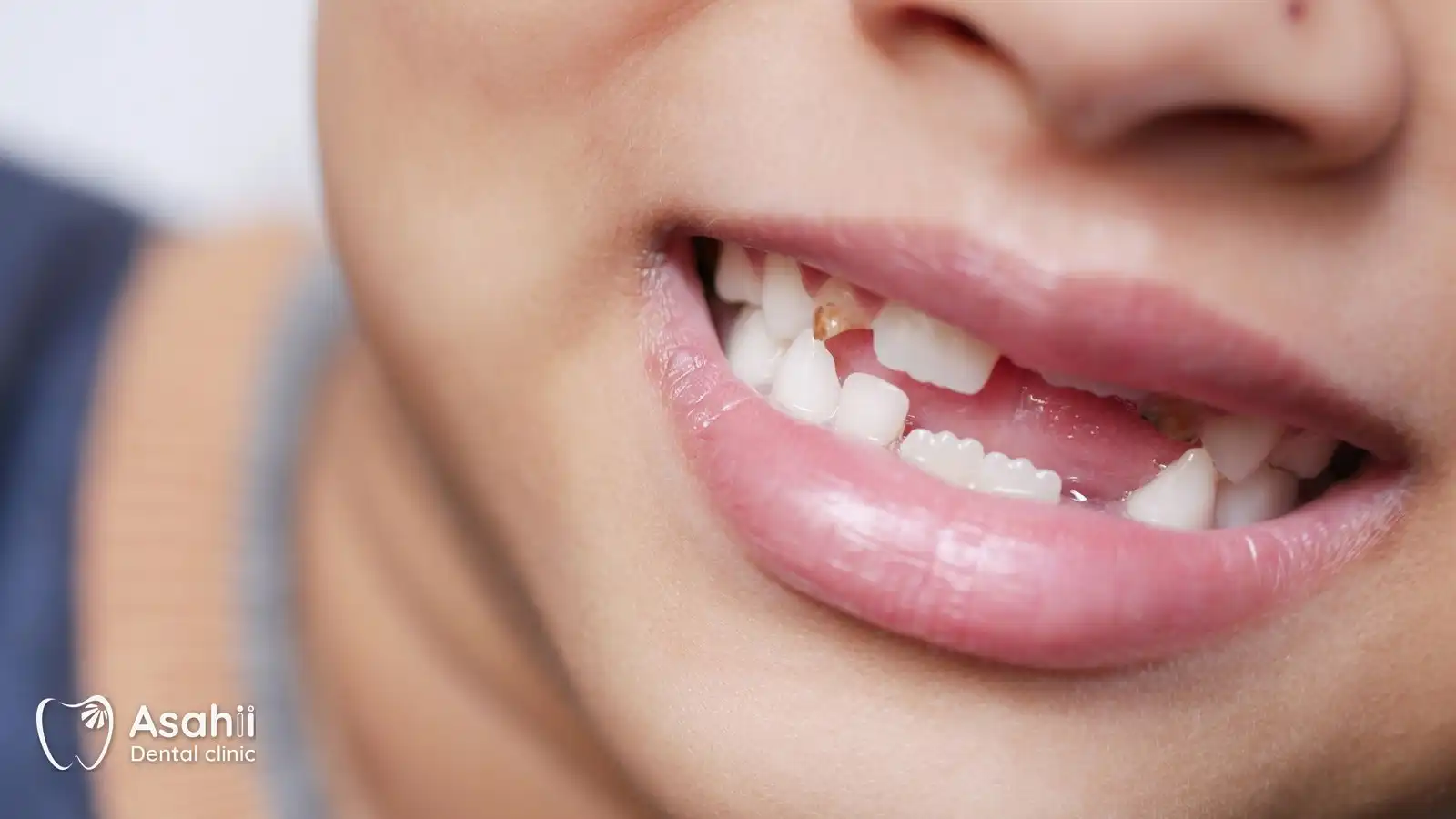
What happens when a baby tooth is lost early?
Teeth in the arch tend to move towards any gap. When a baby molar is lost early:
The first permanent molar behind it may tip and drift forward.
The tooth in front may lean into the gap.
The tooth in the opposite jaw may gradually over-erupt towards the space.
The result is less room for the adult tooth. When it is time to come through, the adult tooth may come in out of line, crowded, or get stuck in the bone. Not every early loss leads to this; it depends on which tooth was lost, the child's age and how far the adult tooth underneath has developed.
Why children lose baby teeth early
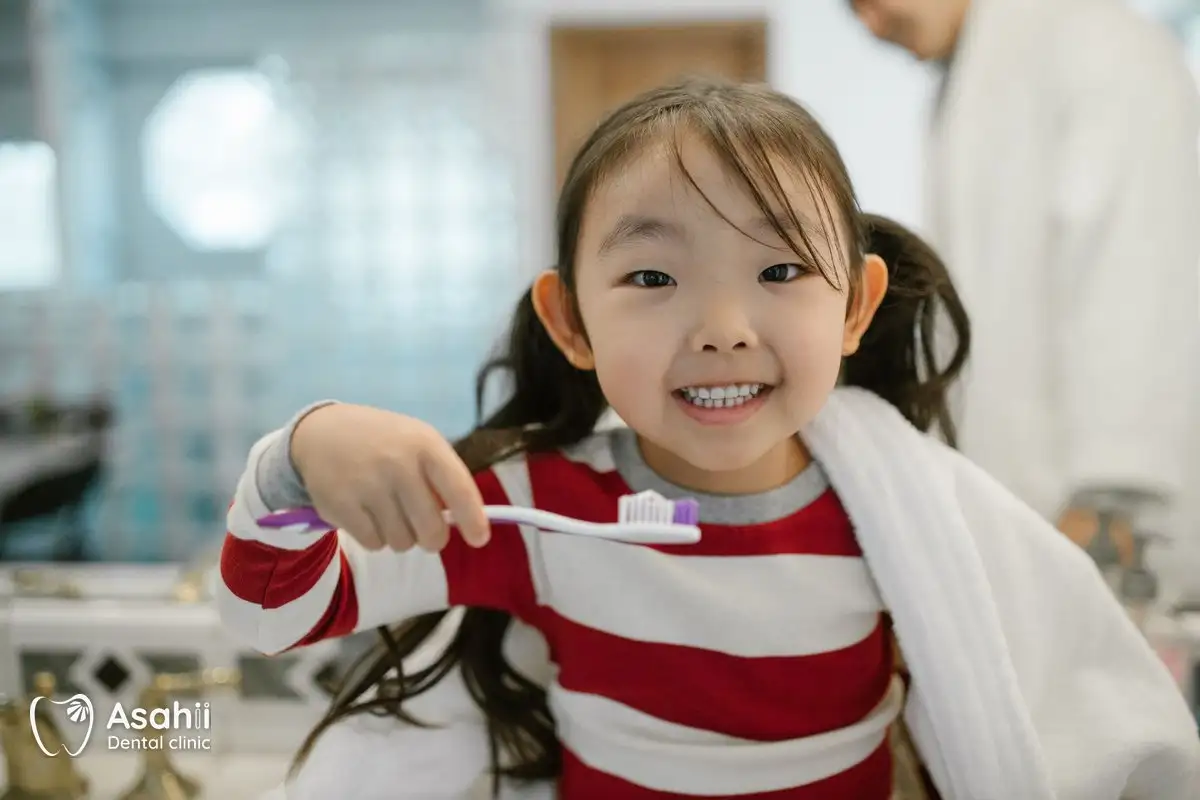
Keeping baby teeth healthy with regular brushing is the simplest way to stop them being lost too early
Severe decay that means the tooth cannot be saved and has to be taken out. This is the most common reason.
Falls and knocks that knock the tooth out or break it deeply.
Some congenital conditions in which baby teeth are missing or fall out early.
As decay is the main cause, preventing decay in baby teeth is also an important way to prevent lost space. For young children who dislike brushing, the "Brush with Asa" game in the Zalo Mini App of Asahii Dental Clinic times a full two minutes and gives a star after each brush. See Tooth decay in baby teeth: prevention and when to see a dentist.
What is a space maintainer?
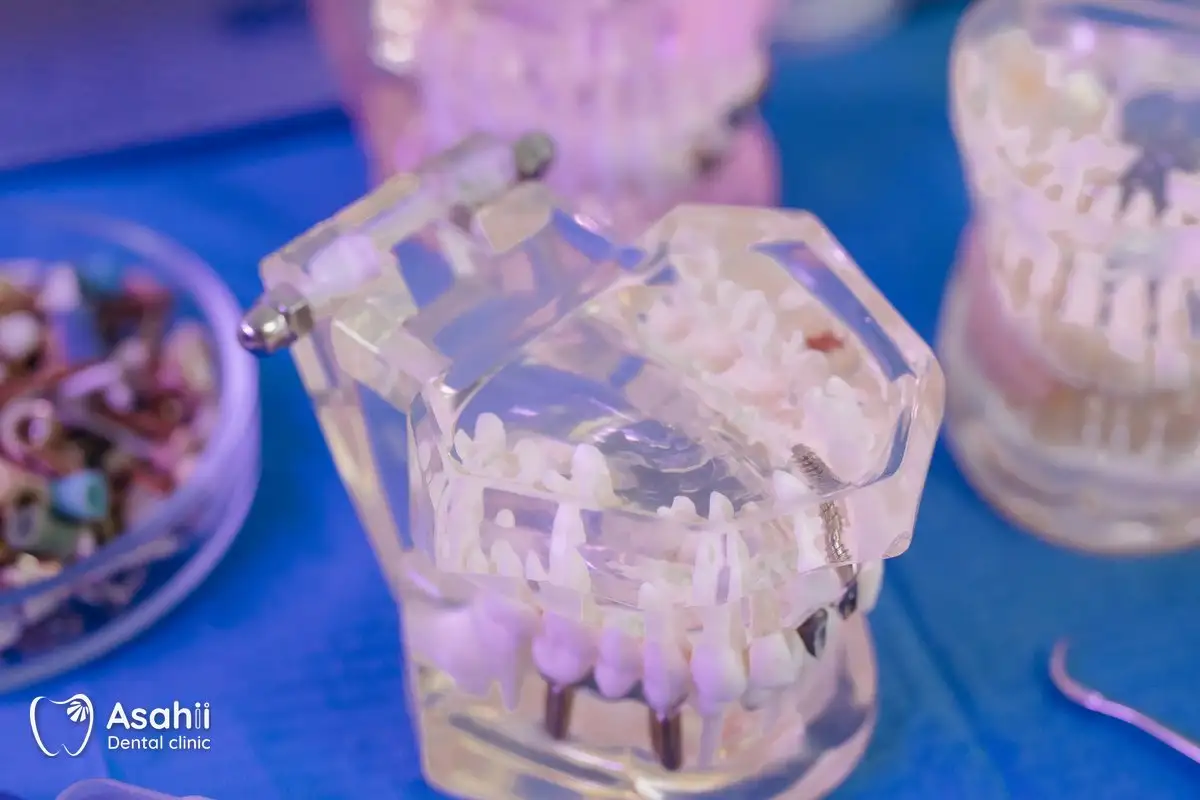
A space maintainer is a small appliance that keeps the gap open until the adult tooth comes in. The dentist recommends one after an examination and X-rays showing how far the adult tooth underneath has developed.
When a baby tooth is lost early, the dentist uses models and X-rays to decide whether a space maintainer is needed
Common types
Fixed space maintainer: usually a metal band on the neighbouring tooth joined to a wire loop that reaches across the gap. Your child cannot take it out, so there is no worry about forgetting to wear it.
Lingual arch: used when teeth are lost on both sides of a jaw, with a wire running along the inside to join two molars.
Removable space maintainer: an acrylic plate, sometimes with a false tooth, useful in some cases of front tooth loss for appearance or speech. This type needs the child to wear it as instructed.
At Asahii, space maintainers (including the lingual arch type) are part of the growth-guidance appliances for children. The doctor shows parents on the X-ray where the adult tooth is before suggesting whether space needs to be held.
Not always needed
The dentist may decide a space maintainer is not needed when:
The adult tooth underneath is about to come through.
The gap is in the baby front teeth, where crowding into the space is less likely.
The X-ray shows there is no adult tooth developing, which calls for a different plan.
When your child has a space maintainer
For the first few days your child may find it awkward and keep touching it with the tongue. Most children get used to it quickly. Parents should:
Brush carefully around the band and wire, perhaps with a small, soft brush.
Avoid chewy sweets and gum, and sticky or very hard foods that can dislodge it.
Stop your child pushing the wire with fingers or tongue.
Keep the check-ups so the dentist can inspect the appliance and follow the adult tooth. Visits are reminded through the Mini App, and the X-rays from each visit are kept in the records to compare how far the adult tooth has come.
Contact the clinic promptly if the appliance is loose, bent, has come off or is digging in. Keep it if it falls out.
When the adult tooth starts to show, the dentist removes the space maintainer. Removal is usually quick and gentle.
Tip from Dr. Chu Thuy Trinh: If a baby tooth is lost early, bring your child in within a few weeks rather than waiting for the new tooth. The gap can close faster than parents expect.
When to bring your child in straight away
A fall has knocked out, broken or loosened a tooth.
A baby tooth was taken out early elsewhere and nobody discussed the gap.
The space maintainer is loose or broken, or is causing a sore on the gum.
A long time has passed and the adult tooth still has not appeared where the baby tooth was lost.
My child had a baby molar taken out. Is a space maintainer always needed?
Not always. The dentist considers your child's age, which tooth was lost and whether the adult tooth is about to come through before making a recommendation.
Does wearing a space maintainer hurt?
Fitting a space maintainer is usually gentle. Your child may feel some pressure or awkwardness for a few days and then get used to it.
How long is a space maintainer worn?
Usually until the adult tooth in that position starts to come through. This varies from a few months to a few years; the dentist follows it at each check-up.
If my child has a space maintainer, will they still need braces later?
A space maintainer helps limit lost space, but it does not decide whether braces will be needed. That also depends on tooth size, jaw growth and the bite as your child grows.
This article is general information reviewed by our dentist; it is not a diagnosis. Only an examination can say what your teeth need.
Was this article helpful?
Tap a star — 1 is not helpful, 5 is very helpful.
Thank you! Your rating helps us write better.
Could not send right now — please try again later.
Why baby teeth matter, the signs of decay in children, prevention at home, when the first dental visit should be and how to help a child not fear the dentist.
When a child should have a first orthodontic check, signs in the teeth, jaws and habits that parents can notice at home, and what the first visit involves.