Asahii Dental clinic
+84 928 888 121 Book a visit

Children's dentistry

Tooth decay in children: prevention and when to bring your child in

Why baby teeth matter, the signs of decay in children, prevention at home, when the first dental visit should be and how to help a child not fear the dentist.
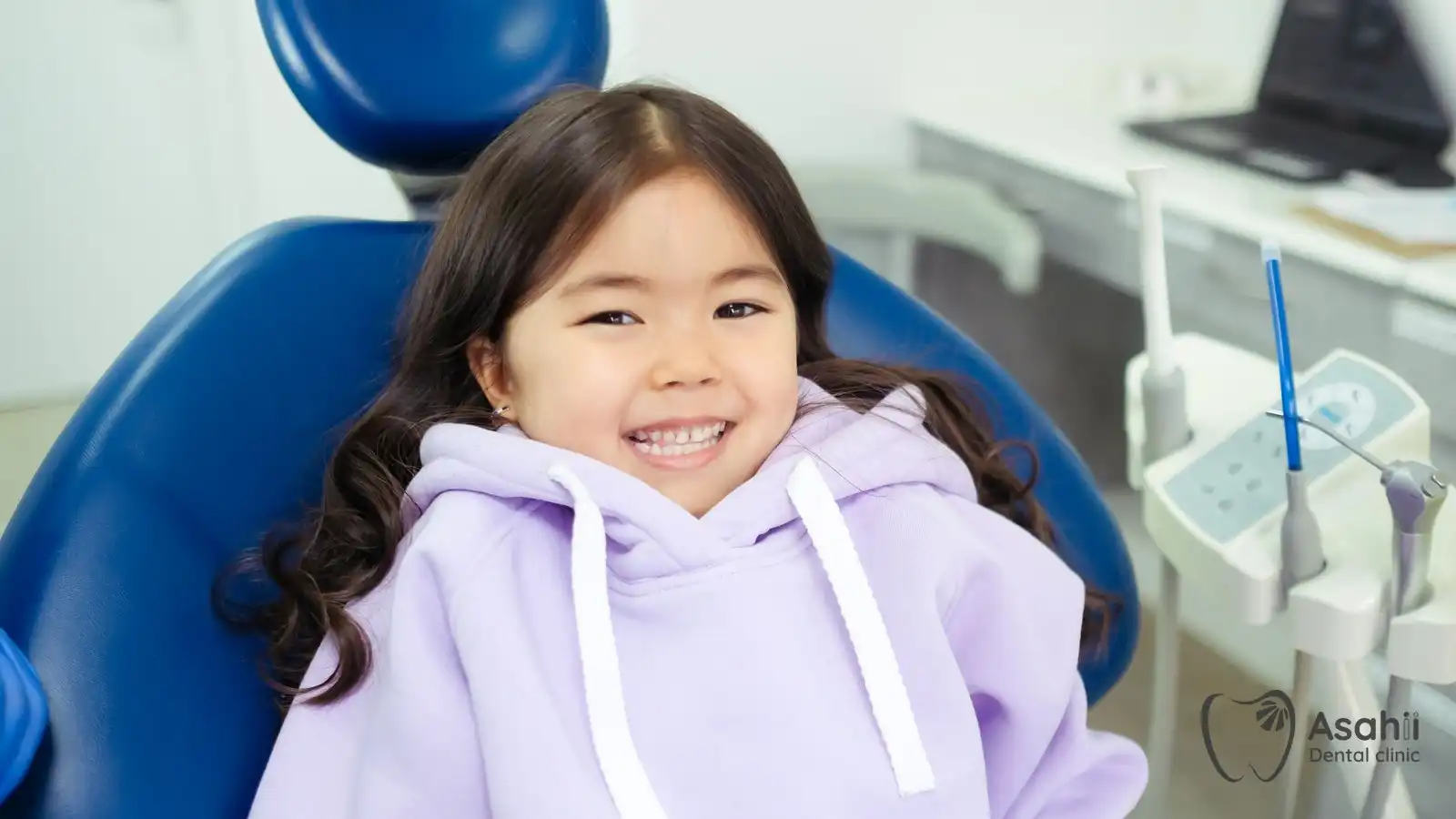
A happy child in the dental chair: regular check-ups catch decay in baby teeth early

"They are only baby teeth, they will fall out anyway" is the thinking that leads to early extractions, pain, children who will not eat, and permanent teeth that come through crooked. Baby teeth have thinner enamel than adult teeth, so decay spreads faster and reaches the pulp sooner. But decay in baby teeth is preventable, and prevention starts before the first tooth appears.

Why baby teeth matter

  • Eating and nutrition: a child with toothache eats less and skips meals, which affects growth.
  • Holding space for the permanent teeth: each baby tooth keeps the space for the adult tooth beneath it. Lose a baby tooth early and the neighbours tip into the gap, leaving the adult tooth short of room and coming through crooked.
  • Speech and jaw development.
  • Infection: a baby tooth decayed to the pulp can abscess and affect the developing adult tooth below it.
  • Confidence: early experiences of toothache and extractions can leave a child afraid of the dentist for years.

Baby molars can be in use until around ten to twelve years of age, so they need to last for years.

Signs of decay in children

  • Chalky white spots at the neck of the tooth or near the gum (the early stage, still reversible with fluoride).
  • Brown or black marks or holes, typically on the upper front teeth and the molars.
  • The child complains of sensitivity to sweet or cold food, chews on one side, is irritable or refuses meals.
  • Bad breath, swollen gum, or a pimple of pus beside a tooth.
  • Upper front teeth rapidly wearing away or chipping in a child who has a bottle at night: bottle decay.

Decay in children is usually painless until it is large, so by the time you see a hole it is already late.
Prevention at home

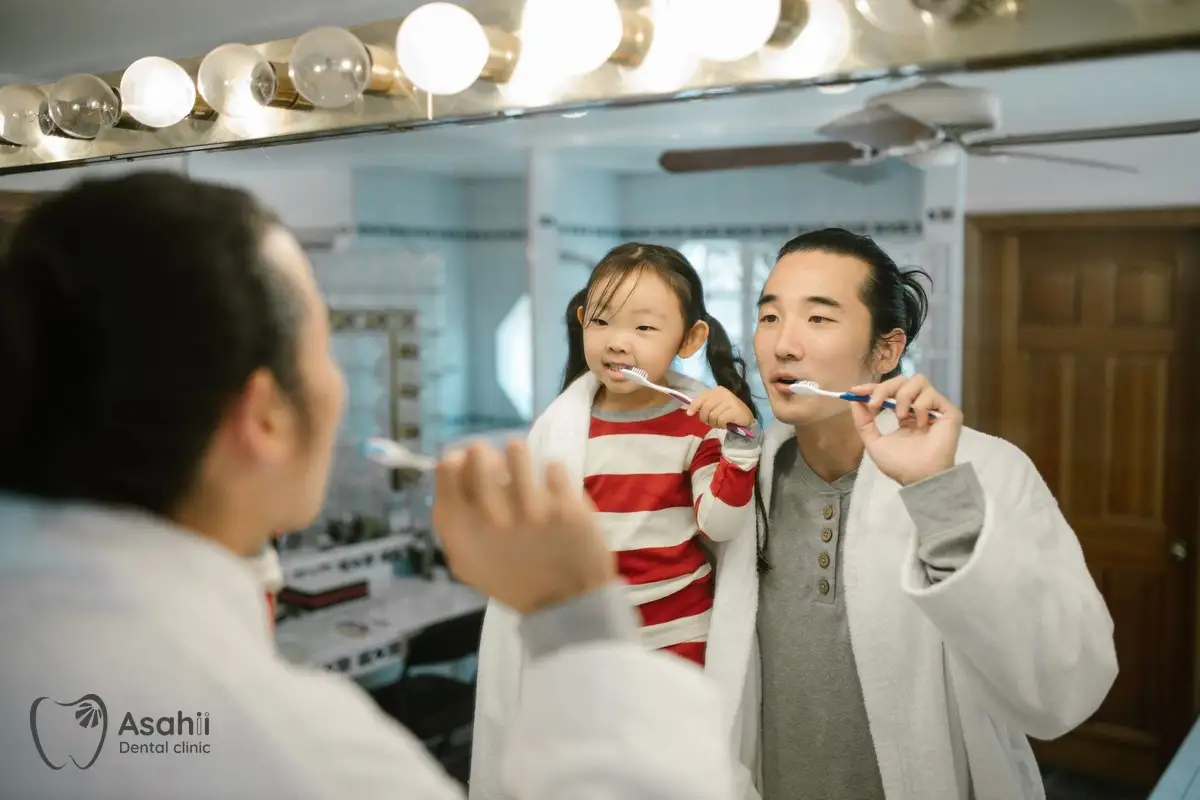
A father brushing his teeth with his daughter: good home habits are the best protection for baby teeth
  • Before the first tooth: wipe the gums with a clean damp gauze after feeds.
  • From the first tooth: brush twice a day with a soft children's brush and fluoride toothpaste. Amount: a thin smear the size of a grain of rice under three years old, a pea-sized amount from three. Fluoride strength as your dentist advises.
  • An adult should brush for the child until about seven or eight, or re-brush after the child has tried, because children are not yet dextrous enough. To get a child to keep going for the full two minutes, the "Brush with Asa" game in Asahii Dental Clinic's Zalo Mini App times the brushing and awards a star for each proper session.
  • No bottle of milk or juice at bedtime; if a night bottle is needed, plain water only. Move from bottle to cup around one year of age.
  • Limit sweets, sticky snacks, soft drinks and sweetened milk between meals. How often sugar is eaten matters more than how much: constant snacking is riskier than one treat followed by brushing.
  • Floss once neighbouring teeth touch, especially the baby molars.
  • Do not taste, blow on or share spoons with the child's food, to avoid passing decay bacteria from adult to child.
  • Drink water after eating.

The first dental visit

Bring your child when the first tooth appears, and at the latest by their first birthday, then every six months. The first visit is gentle: the dentist looks at the teeth and gums, shows parents how to brush, discusses diet, and may apply fluoride. Early visits catch white spots that can be reversed with fluoride instead of filled, and let the child get used to the clinic before anything hurts.

When the first permanent molars come through around age six, the dentist may apply fissure sealants to prevent decay. Routine visits are also when the dentist watches how the permanent teeth come through and how the jaws grow; at Asahii, Dr. Chu Thuy Trinh looks after growth-guidance orthodontics for children (functional appliances such as the Twin Block, expanders, or Invisalign First) when early intervention is needed, and explains the options and costs to parents before anything is done.
Helping a child not fear the dentist

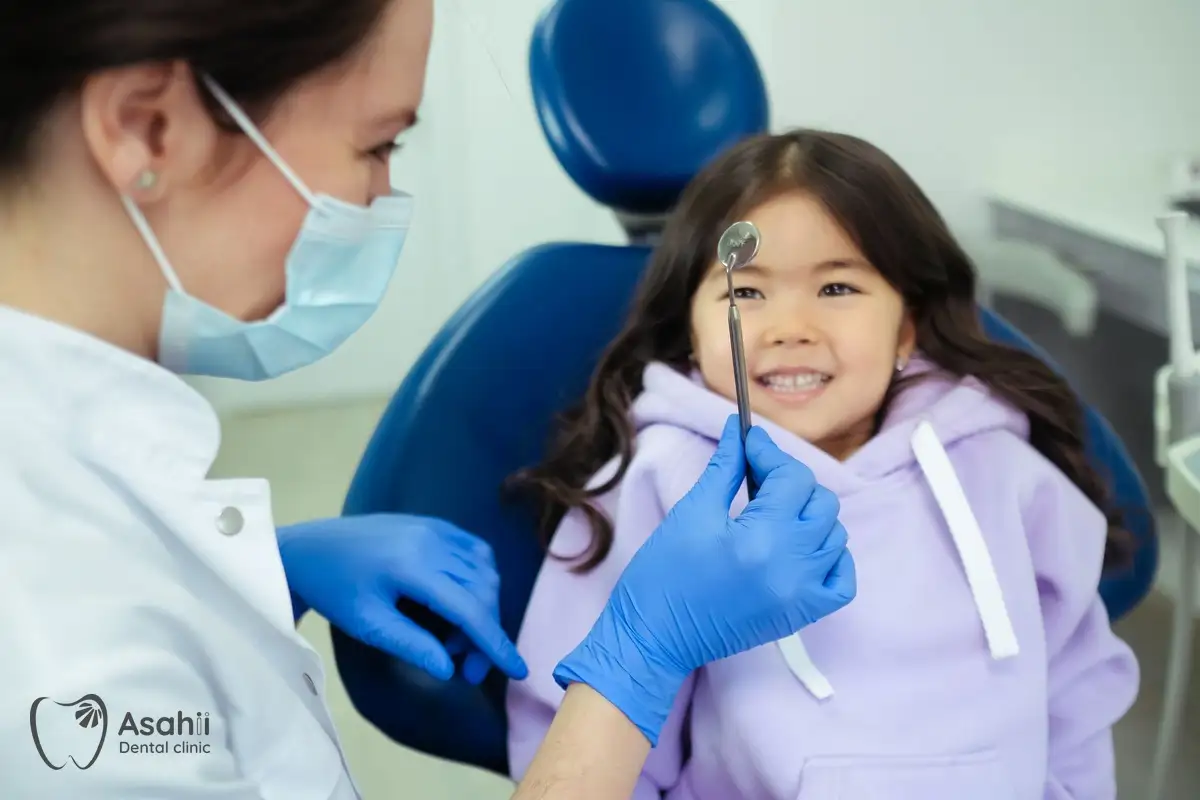
The dentist lets a child play with the dental mirror so she isn't afraid of check-ups
  • Make the first visit before there is a problem, so it is just "counting teeth".
  • Talk about the dentist as something ordinary. When reassuring, avoid mentioning "pain" or "pulling teeth"; those are the only words a child remembers.
  • Read books or watch videos about going to the dentist; play dentist at home.
  • Let the dentist lead; stay close but do not make conditional promises of rewards or show anxiety.
  • Praise the child after the visit even if all they did was sit in the chair.
  • Pick a time when the child is rested and not hungry. Asahii is open every day of the week, 08:30 to 19:00, so parents can bring a child on a weekend morning rather than rushing after school; the six-monthly visit is reminded through the Mini App.

When to bring your child in straight away

  • Toothache, refusing food, crying at night.
  • Swollen gum, swollen cheek, a pimple of pus, fever.
  • A tooth broken, loosened or knocked out in a fall.
  • A visible hole or a discoloured tooth, even if the child has not complained.
  • An adult tooth coming through while the baby tooth is still in place.

How far the decay has gone and the right treatment for your child can only be decided by an examination. See our preventive dentistry page or book an appointment for your child by hotline 0928 888 121, Zalo or the Mini App.

Frequently asked questions

At what age should a child first see a dentist?

When the first tooth appears, and at the latest by the first birthday, then every six months. Early visits prevent decay and let the child get used to the clinic before anything hurts.

Do decayed baby teeth need filling?

Yes. Decay in baby teeth spreads quickly to the pulp, causes pain and can affect the adult tooth developing below. Early decay may only need fluoride; a cavity usually needs a filling. The dentist decides after an examination.

Can children under three use fluoride toothpaste?

Yes, with a very thin smear the size of a grain of rice, brushed by a parent. Fluoride is an effective way to prevent decay; ask your dentist about the right strength.

Does night feeding cause decay?

Milk sitting on the teeth all night is a common cause of decay in the upper front teeth of young children. Wipe the teeth after a night feed, stop night bottles early, and never let a child fall asleep with a bottle of milk or juice.

This article is general information reviewed by our dentist; it is not a diagnosis. Only an examination can say what your teeth need.

Was this article helpful?

Tap a star — 1 is not helpful, 5 is very helpful.

Share: Facebook Email

Considering preventive dentistry?

Leave your number — reception calls back to agree a time. The dentist explains and quotes before any treatment.

Related services

Read next

A dentist getting ready for a routine scale and clean, usually every six months
Oral care at home

Regular scaling: how often, and why it matters

How tartar forms, the benefits of regular check-ups and scaling, how often suits different people, what to expect afterwards and how to book.

· 3 min read ·

Book a visit

Book a preventive dentistry consultation

Leave your phone number – our front desk will call you back to find a time that suits you.

Request an appointment

Our front desk will call you back to find a suitable time. Your details are protected under our privacy policy.