
Dental implants
Missing teeth for years: your options and when to act
How a long-missing tooth affects chewing and neighbouring teeth; dentures, bridges and implants compared; why an examination and X-rays come before the choice.
· 5 min read ·

Dental implants
Dental implant treatment step by step: examination and scans, planning, placing the post, the healing period, fitting the crown, and who needs extra care.

A dental implant replaces a missing tooth with a titanium post placed in the jawbone in place of the root, with a porcelain crown fitted on top. Many people are put off by the word "surgery", but in practice this is a minor procedure in the mouth under local anaesthetic, usually finished within about an hour for one post. What takes time is waiting for the bone to fuse with the post. This article walks through each step so you know what to expect.
The dentist examines your mouth, asks about your medical history and medicines, and takes a panoramic X-ray and a cone-beam CT scan. The CT scan shows the bone in three dimensions: height, width, density, and the distance to the sinus and the nerve canal. This is how the dentist knows whether a post can be placed straight away or whether bone grafting or a sinus lift is needed first.
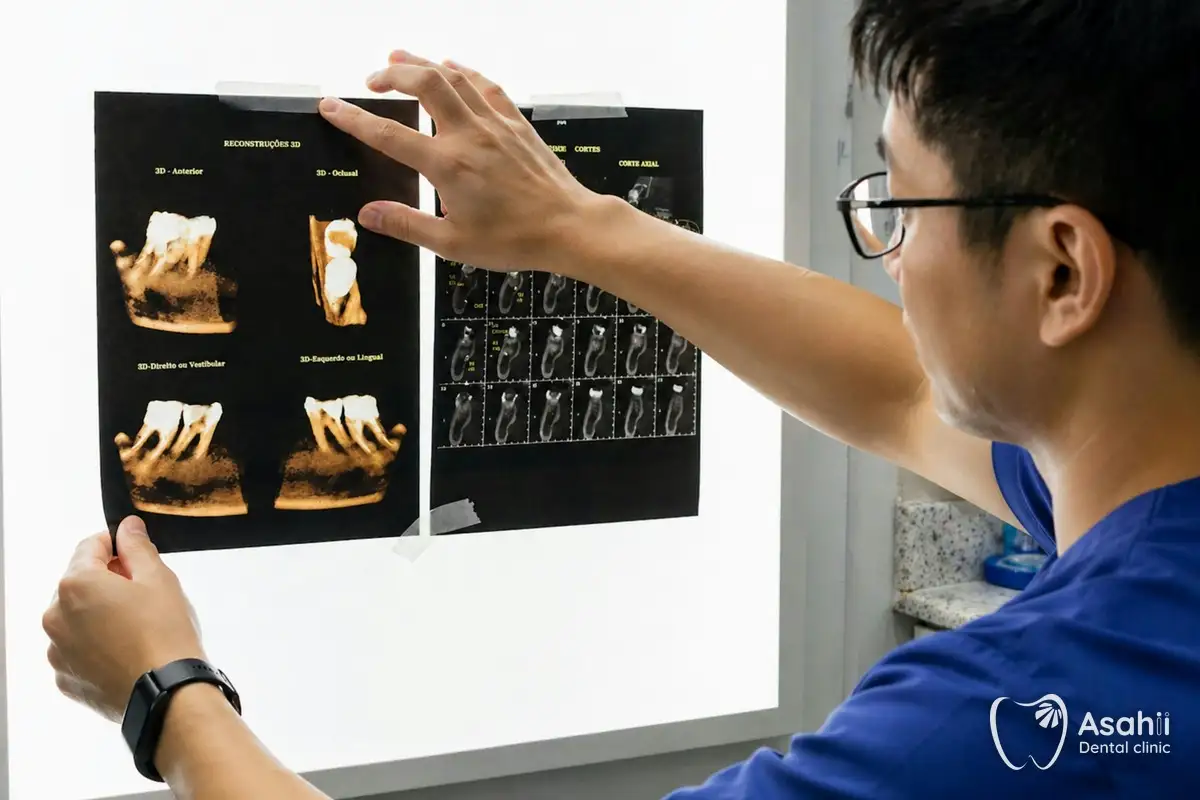
From the scans and the state of your mouth, the dentist decides:
The plan is explained to you and agreed before anything starts. If you have a medical condition, the dentist may need to consult the doctor treating it. At Asahii Dental Clinic this plan is drawn up on your CT scan by Dr. Tran Van Thang, the clinic's oral surgeon and implantologist, who explains each option and gives clear prices; the plan is written down item by item with its costs, and you confirm it before treatment starts.
The mouth needs to be clean and stable: scaling, treatment of gum inflammation, fillings or treatment of decayed teeth. Smokers are advised to stop for at least several weeks before and after surgery, because smoking slows healing and raises the risk of the post failing to integrate.
Under local anaesthetic, the dentist opens a small flap in the gum, prepares a channel in the bone to the exact size and places the post. Some cases use a 3D-printed surgical guide made from the computer plan so the post goes exactly where it was designed. The gum is stitched. Depending on the case, the post is covered by the gum or fitted with a healing cap that sits above it. The implant system is chosen by the dentist for your bone and the position of the missing tooth and named in the plan; Asahii uses Straumann and Neodent (Switzerland), Megagen AnyRidge and Dio (Korea), Kontact Biotech (France) and Adin.
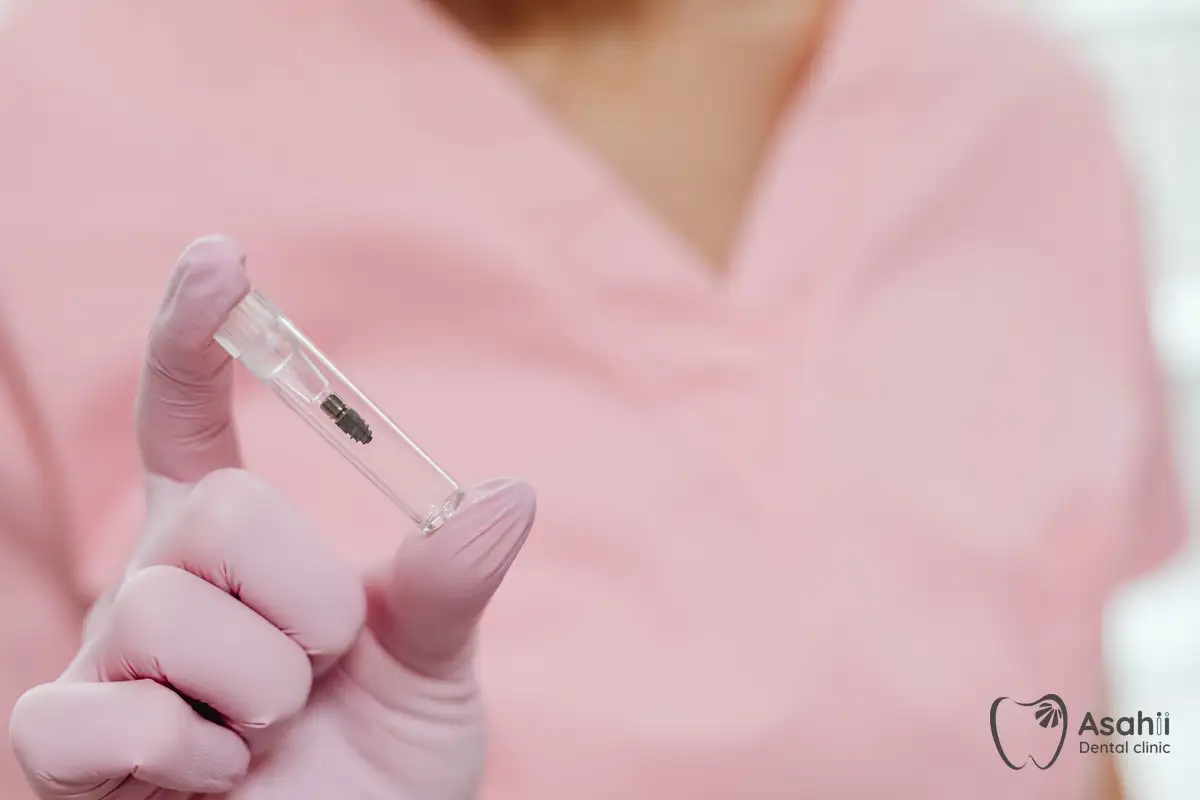
For front teeth, or whenever appearance matters, a temporary tooth can be fitted so you are not left with a gap.
After placement, the bone needs time to grow firmly around the surface of the post, a process called osseointegration. This usually takes a few months; the lower jaw is often faster than the upper because its bone is denser. During this time you eat almost normally, avoid chewing hard on the implant site, and attend review appointments so the dentist can check healing. Asahii's Zalo Mini App reminds you of each of these dates automatically, and the X-ray taken at each review is kept in your record for you to look at.
If bone grafting or a sinus lift was needed, the wait is longer; sometimes the graft has to mature before the post can be placed at all.
Once the post has integrated, the dentist takes an impression or a digital scan of the implant site and the crown is made. A connector (abutment) is attached to the implant and the crown is fitted to it. The dentist adjusts the bite so the new tooth meets the opposing teeth correctly. After that come regular check-ups of the crown, the gum and the bone around the implant.
Implants are not suitable for everyone, or need more preparation, when:
The dentist will ask about your history in detail before planning; tell them about every condition and medicine, including supplements.
After the post is placed, contact the clinic at once if:
See also Caring for a dental implant.
Your own plan, the number of visits and the waiting time can only be set after a doctor has examined you and read your CT scan. See our prosthetics and implants page or book an appointment by hotline 0928 888 121, Zalo or the Mini App.
The procedure is done under local anaesthetic, so during it you mainly feel vibration and pressure. For a few days afterwards there may be swelling and mild soreness, usually controlled with the medicine prescribed and cold compresses.
Usually a few months, depending on bone quality and position. Some suitable cases can have a temporary tooth early; cases needing bone grafting take longer. The dentist gives an estimate in the plan.
An implant can last many years with good hygiene, regular check-ups and no smoking. The crown on top may need replacing after long use, as any porcelain crown might.
A panoramic X-ray gives an overview, but to measure bone in three dimensions and avoid the sinus and nerves, the dentist usually needs a cone-beam CT scan before placing the post.
This article is general information reviewed by our dentist; it is not a diagnosis. Only an examination can say what your teeth need.
Tap a star — 1 is not helpful, 5 is very helpful.
Thank you! Your rating helps us write better.
Could not send right now — please try again later.Leave your number — reception calls back to agree a time. The dentist explains and quotes before any treatment.
How a long-missing tooth affects chewing and neighbouring teeth; dentures, bridges and implants compared; why an examination and X-rays come before the choice.
· 5 min read ·

Caring for a dental implant: the first 24 hours, eating, cleaning the site, long-term hygiene and the warning signs that mean you should come back.
· 4 min read ·

Preparing for wisdom tooth removal, care in the first 24 hours, eating and cleaning over the following days, and the warning signs that mean you should call.
· 4 min read ·
Book a visit
Leave your phone number – our front desk will call you back to find a time that suits you.