
Dental implants
How dental implant treatment works, step by step
Dental implant treatment step by step: examination and scans, planning, placing the post, the healing period, fitting the crown, and who needs extra care.
· 5 min read ·

Dental implants
How a long-missing tooth affects chewing and neighbouring teeth; dentures, bridges and implants compared; why an examination and X-rays come before the choice.

Many people leave a missing back tooth for years because "nobody can see it" and they can still chew on the other side. But that gap does not stay still. Over time the neighbouring teeth tip into it, the opposing tooth drifts down, and the jawbone where the tooth was slowly shrinks. This article covers those changes, the ways a missing tooth can be replaced, and why an examination and X-rays matter before you choose.
Artificial teeth on an acrylic or metal base that rests on the gum and clips to the remaining natural teeth. Can replace several teeth at once, is quick to make and the least expensive. Drawbacks: weaker chewing, may loosen as the bone keeps shrinking, has to be removed and cleaned daily, and the clasps can wear the teeth they hold on to.
The two teeth next to the gap are trimmed to act as supports and a row of joined porcelain teeth is cemented across. Fixed, chews well, looks good, done in a few visits. Drawbacks: healthy natural teeth have to be trimmed, the supporting teeth carry extra load and are at risk later, the bone under the bridge still shrinks, and cleaning under it takes effort.
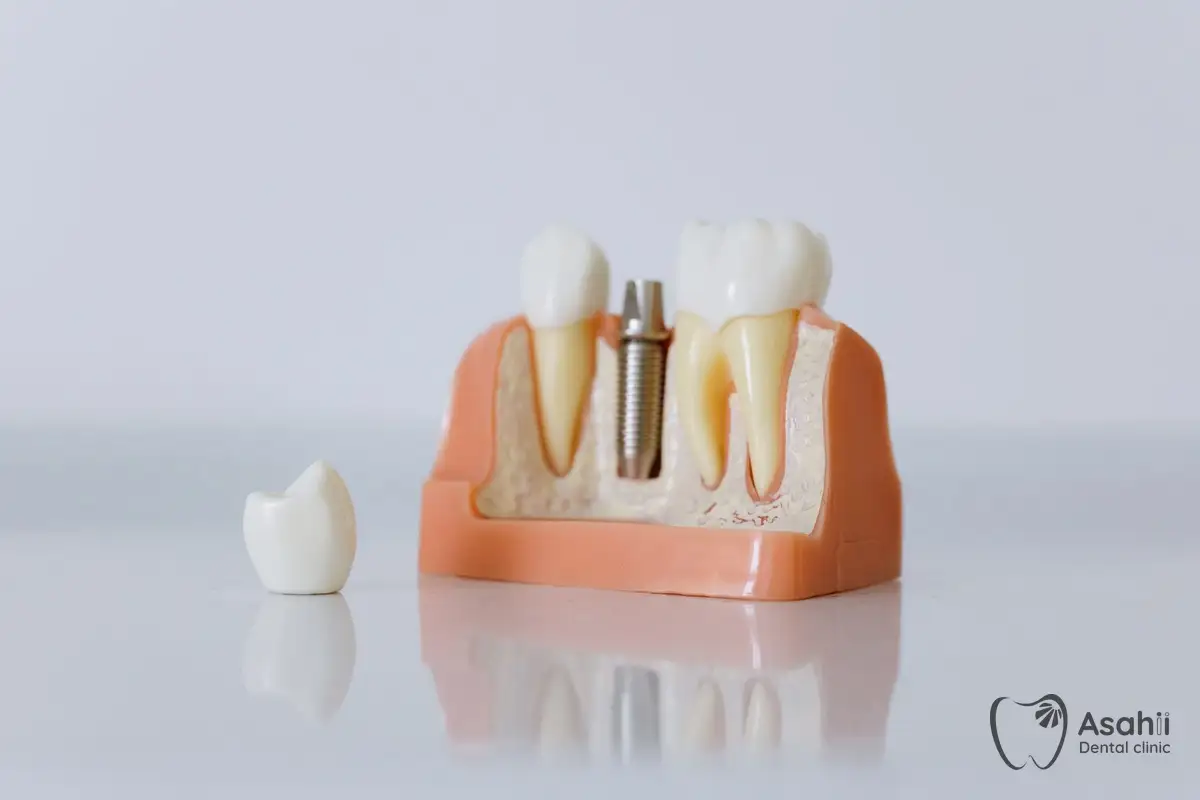
A titanium post is placed in the jawbone in place of the root; once it has fused with the bone, a porcelain crown is fitted on top. No trimming of neighbouring teeth, chewing close to a natural tooth, and the bone at the site is preserved. Drawbacks: minor surgery, several months to complete, higher cost, and it needs enough bone and good general health. At Asahii Dental Clinic implants are placed by Dr. Tran Van Thang, the clinic's oral surgeon and implantologist, using Straumann and Neodent (Switzerland), Megagen AnyRidge and Dio (Korea), Kontact Biotech (France) and Adin systems; for several missing teeth or a whole arch there is also an implant-supported full-arch (All-on) option. See How dental implant treatment works, step by step.
There is no single right answer. Your dentist weighs:
For example, with one missing molar and sound teeth on either side, many dentists favour an implant so the healthy teeth are not trimmed. If the neighbouring teeth already have crowns or large fillings, a bridge may be sensible. For several missing teeth in an older person with medical conditions, a removable denture remains a good choice.
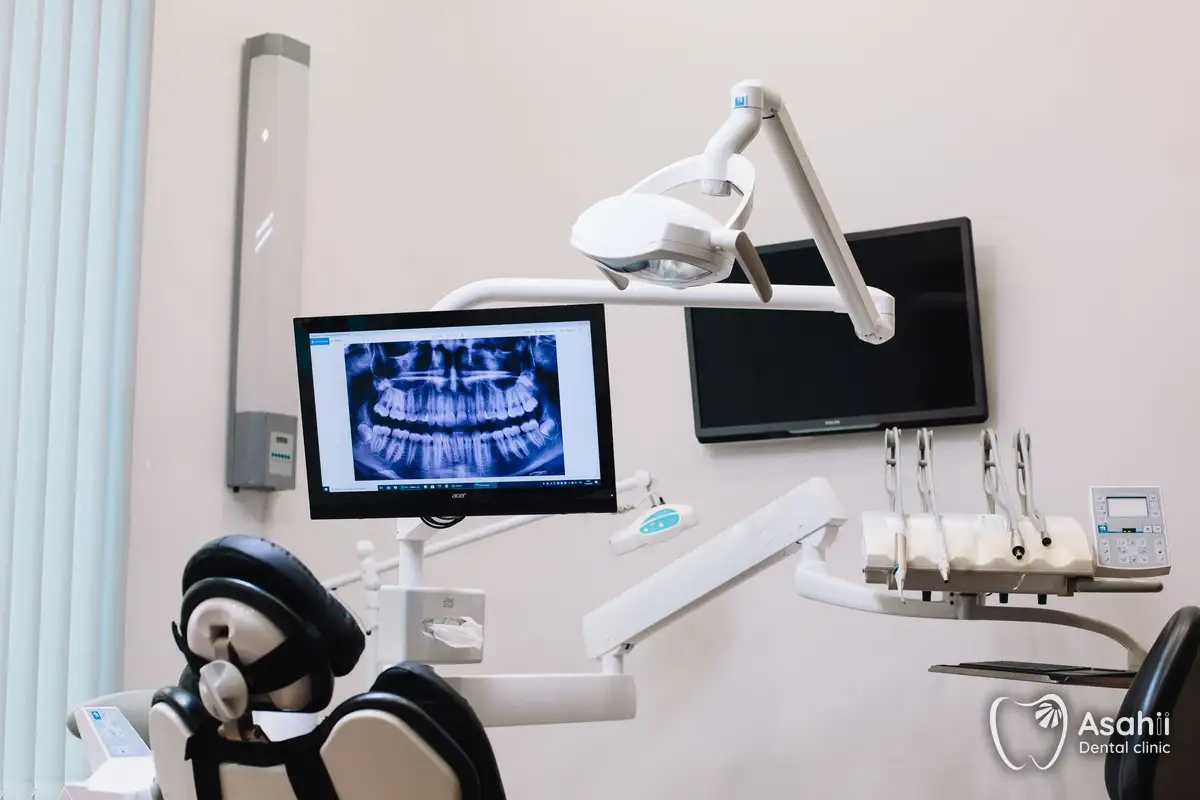
The bone under the gum cannot be seen by eye. A panoramic X-ray shows bone height, the roots of the neighbouring teeth, the sinus and the nerve canal. For an implant the dentist usually also needs a cone-beam CT scan to measure bone width and height in three dimensions, and to decide whether grafting or a sinus lift is needed. The examination also checks your bite, whether there is still enough space, and whether the gums are healthy. Only after this can the plan and the cost be stated accurately. At Asahii the doctor walks you through each point on the scan, sets the options side by side and gives clear prices; the plan is written down item by item with its costs, you confirm before anything starts, and the scans and records are kept in the clinic's system for you to look at again.
The sooner the better, while the bone has not shrunk much and the neighbours have not tipped. After an extraction the dentist usually reviews you after a few weeks to months to choose the right moment. A tooth missing for many years can still be replaced; it may just need bone grafting or straightening of the neighbouring teeth first.
The right option can only be chosen after a doctor has examined you and read your X-rays. See our prosthetics and implants page or book an examination and X-rays by hotline 0928 888 121, Zalo or the clinic's Mini App.
A wisdom tooth (third molar) usually not. Other molars should be replaced because of the effect on chewing, the neighbouring teeth and the jawbone. Your dentist will advise for the specific position.
Often yes, possibly with bone grafting or a sinus lift first. Only a cone-beam CT scan and an examination can answer this for you.
A bridge needs the two supporting teeth trimmed, and they then carry extra load. If those teeth are sound, dentists often consider an implant to preserve them.
Age itself is not the main obstacle; general health, bone and medicines are what matter. Many older patients do well with implants after a careful assessment.
This article is general information reviewed by our dentist; it is not a diagnosis. Only an examination can say what your teeth need.
Tap a star — 1 is not helpful, 5 is very helpful.
Thank you! Your rating helps us write better.
Could not send right now — please try again later.Leave your number — reception calls back to agree a time. The dentist explains and quotes before any treatment.
Dental implant treatment step by step: examination and scans, planning, placing the post, the healing period, fitting the crown, and who needs extra care.
· 5 min read ·

Caring for a dental implant: the first 24 hours, eating, cleaning the site, long-term hygiene and the warning signs that mean you should come back.
· 4 min read ·

When a porcelain crown really helps, when a filling, veneer or braces are better, the crown procedure step by step, and how to care for a crowned tooth.
· 4 min read ·
Book a visit
Leave your phone number – our front desk will call you back to find a time that suits you.