Preparing for and recovering from wisdom tooth removal
Preparing for wisdom tooth removal, care in the first 24 hours, eating and cleaning over the following days, and the warning signs that mean you should call.
Wisdom tooth removal is a common minor procedure, but how comfortable the following days are depends largely on how you prepare and look after yourself. The aims are simple: keep the blood clot in the socket, limit swelling and avoid infection. This article lists what to do and what to avoid at each stage.
Before the procedure
Tell the dentist everything about your health and medicines, especially anticoagulants, aspirin, diabetes and osteoporosis medicines; any allergy to anaesthetics or antibiotics.
Eat something light beforehand, unless told to fast (for example with sedation).
Sleep well and avoid alcohol the night before.
Plan your time: avoid having it done just before work, school or a long trip. Bring someone with you if the removal is expected to be difficult.
Have ready at home: a cold pack, porridge, soup, yoghurt, saline solution.
Brush your teeth before you come.
At Asahii Dental Clinic the dentist explains beforehand how the tooth will be removed, what to expect during and after the visit, and the cost, so you decide first and the date is set afterwards; buried teeth and teeth close to the nerve canal are removed by Dr. Tran Van Thang, the clinic's oral surgeon.
The first 24 hours
Bite firmly on the gauze for about 30 to 45 minutes. If it keeps oozing, replace it with clean gauze and bite again. Pink-tinged saliva on the first day is normal.
No vigorous rinsing, no spitting, no sucking or straws, and do not poke the socket with your tongue. These dislodge the clot and cause a very painful dry socket.
Cold compress on the cheek, 15 minutes on and 15 off, for the first few hours.
Take medicines on time as prescribed. Take the first painkiller before the anaesthetic wears off.
No smoking and no alcohol for at least several days.
Keep your head raised when lying down. Avoid strenuous activity.
The anaesthetic lasts a few hours: do not bite your lip or cheek, and do not eat while still numb.
Eating over the following days
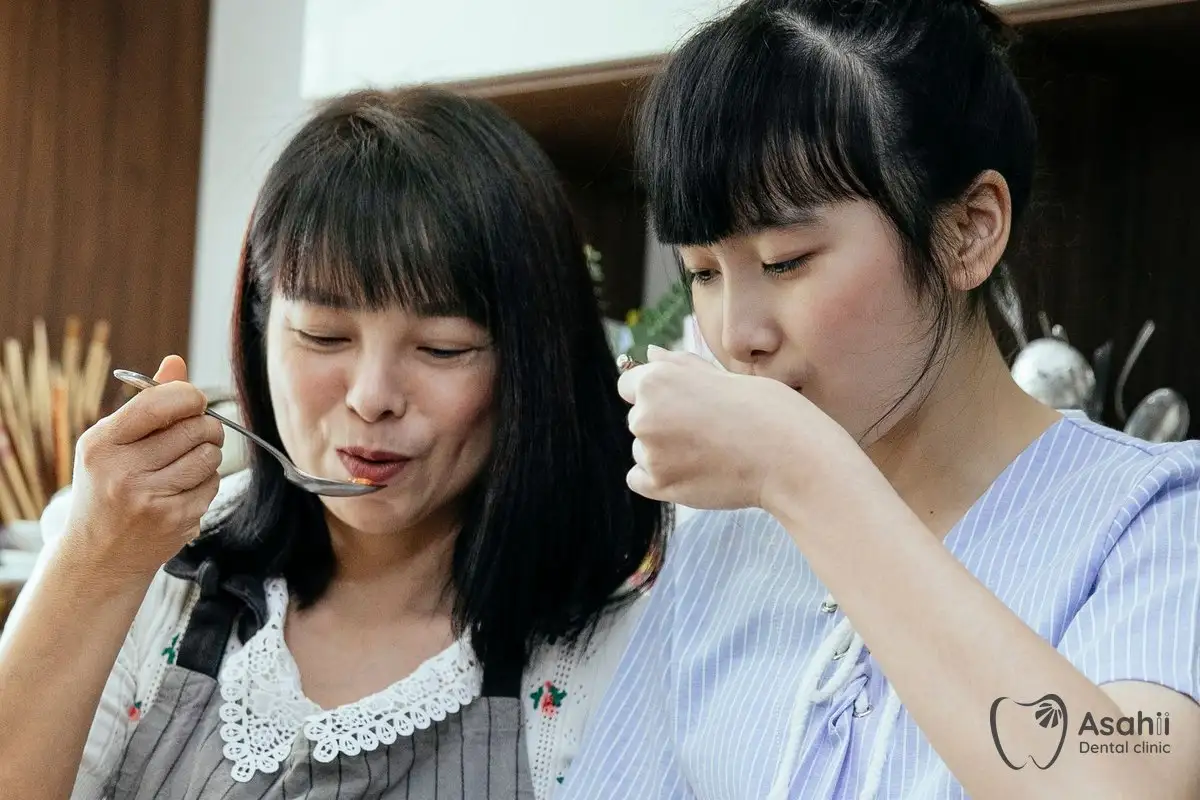
Soft, cool food such as porridge or soup suits the first days after wisdom tooth removal
Day one: liquid, cool or lukewarm: porridge, soup, milk, smoothies (with a spoon).
Days two and three: soft food: soft rice, eggs, fish, tofu, well-cooked vegetables. Chew on the other side.
Avoid: hard, crunchy food, anything with small seeds, spicy or hot food, fizzy drinks, alcohol.
Drink plenty of water. Do not skip meals for fear of pain; lack of energy slows healing.
Cleaning over the following days
From day two: rinse gently with saline or the mouthwash prescribed after each meal, letting it fall out rather than spitting hard.
Brush the other teeth normally, keeping the brush away from the socket for the first few days.
Food trapped in the socket: do not pick at it with a toothpick or your finger; rinse gently, or use the irrigating syringe the clinic gives you (if any) from about day five as instructed.
If the sutures do not dissolve, come for removal as scheduled, usually after a week; Asahii's Zalo Mini App sends an automatic reminder for that date.
What is normal
Swelling peaks on the second or third day, then settles.
Pain eases day by day; a buried tooth can hurt more and for longer than one that had come through.
Slightly limited mouth opening, mild bruising on the cheek, a slight temperature on the first day.
An unpleasant taste in the mouth for a few days.
Warning signs: call the clinic
Call the clinic straight away for bleeding that won't stop, growing swelling or a fever after an extraction
Bleeding that does not stop after more than an hour of biting on gauze correctly.
Swelling spreading to the cheek or neck, or increasing after the third day.
High fever, chills, feeling very unwell.
Severe pain increasing from the third or fourth day, spreading to the ear, with a bad smell: this may be a dry socket and needs the dentist.
Pus or foul discharge from the socket.
Numbness of the lip, chin or tongue that persists after the anaesthetic wears off.
Increasing difficulty opening the mouth, difficulty swallowing or breathing: go to an emergency facility at once.
Your dentist will give you an instruction sheet for your specific tooth and procedure; follow that. If any of the warning signs appear, contact the clinic by hotline 0928 888 121 or Zalo to be checked early; Asahii is open every day of the week, 08:30 to 19:00. See also our general dentistry page.
Frequently asked questions
How long does the pain last after wisdom tooth removal?
It usually eases clearly after two or three days and is almost gone after about a week. Buried or difficult teeth can take longer. Pain that increases after the third day is not normal and needs checking.
Can I brush my teeth after the extraction?
Yes. Brush the other teeth normally from the first day, just keep away from the socket for a few days. Rinse gently from the second day.
Do I need antibiotics after the extraction?
It depends on the case; the dentist decides based on the difficulty and any infection. If they are prescribed, take the full course for the full number of days.
What is a dry socket?
It is when the blood clot comes out of the socket too early, exposing the bone and causing significant pain from the second to the fourth day. It is more common in smokers and after vigorous rinsing. The dentist cleans the socket and places a dressing to relieve the pain; it is not something to treat at home.
This article is general information reviewed by our dentist; it is not a diagnosis. Only an examination can say what your teeth need.
Was this article helpful?
Tap a star — 1 is not helpful, 5 is very helpful.
Thank you! Your rating helps us write better.
Could not send right now — please try again later.
Dental implant treatment step by step: examination and scans, planning, placing the post, the healing period, fitting the crown, and who needs extra care.
· 5 min read·
Book a visit
Book a general treatment consultation
Leave your phone number – our front desk will call you back to find a time that suits you.