Teeth whitening: who it suits and what to know first
Who teeth whitening works for, why teeth discolour, in-clinic versus at-home whitening, who should not whiten, sensitivity afterwards and keeping the result.
Whitening is the least invasive way to brighten your teeth: no trimming, no crowns, just a peroxide-based gel that penetrates enamel and dentine and lightens the pigments inside. But whitening is not for everyone and does not fix every kind of discolouration. Understanding it first saves disappointment and unnecessary sensitivity.
Why teeth discolour
Surface staining: coffee, tea, red wine, tobacco, coloured soft drinks, tartar. This kind usually improves a lot with scaling, polishing and whitening.
Discolouration from within: with age (enamel thins and the yellower dentine shows through), tetracycline taken in childhood, fluorosis, a tooth that was injured or has lost its pulp. Whitening may help partly; severe cases need veneers or crowns.
Filled or crowned teeth: filling materials and porcelain do not change colour. After whitening, an old filling may look darker than the tooth and need replacing.
In-clinic whitening
The dentist protects the gums with a barrier, applies a high-concentration gel to the teeth and may use a light to boost the effect. A session takes about an hour and the difference is visible straight away. The advantages are speed and having a dentist control the gums and the level of sensitivity. One or two more sessions may be needed for darker teeth.
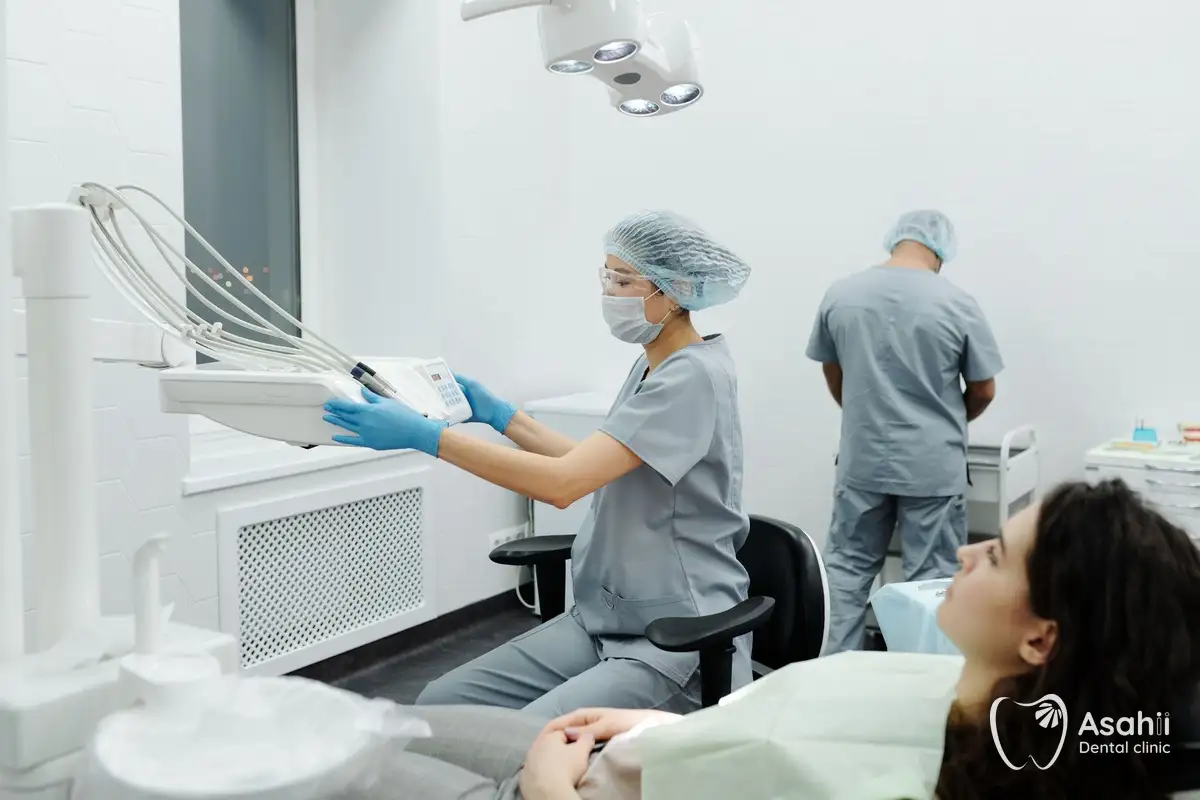
The dentist prepares the equipment for an in-clinic whitening session
At-home whitening with custom trays
The dentist takes an impression to make trays that fit your teeth exactly and prescribes a low-concentration gel to wear for a few hours a day or overnight for about one to two weeks. The result builds gradually, with less sensitivity, and is easy to top up later because you keep the trays. It needs discipline to wear the trays as instructed and not to let gel spill onto the gums.
Many people combine both: an in-clinic session for the initial result, then home trays to maintain it. Asahii Dental Clinic offers all three: in-clinic whitening, at-home whitening with custom trays, and a combined package; the dentist examines you first, tells you which suits the colour of your teeth and gives the price of each package before starting.
What about over-the-counter products?
Whitening toothpastes mainly remove surface stains and do not change the colour inside the tooth. Strips and gels sold without a prescription are low-concentration and come with trays that do not fit, so gel easily reaches the gums. Charcoal, lemon or baking soda rubbed on the teeth can wear the enamel and make teeth look yellower in the long run. If you want to use a home product, ask your dentist first.
Who should not whiten
Pregnant or breastfeeding women (safety data are insufficient, so it is postponed).
Children and teenagers whose pulps are still large.
Teeth with untreated decay, worn necks, cracks or exposed dentine: the gel penetrates and causes significant sensitivity.
Untreated gum inflammation or gum disease.
Teeth that are already very sensitive.
Front teeth that have crowns, veneers or large fillings: whitening will not change their colour.
Allergy to peroxide.
The dentist examines you, and takes X-rays when needed, before deciding.
Sensitivity after whitening
Mild sensitivity to cold for a day or two after whitening is common and settles on its own. To reduce it:
Use a desensitising toothpaste before and after whitening as instructed.
Avoid very hot, cold or acidic food and drink for a few days.
With home trays, cut the hours or whiten every other day if it is uncomfortable.
Sensitivity lasting many days, or sharp pain in one specific tooth, needs checking.
Keeping the result
Keeping teeth white after whitening: cut down on coffee, tea and smoking, and brush regularly
For the first 48 hours, avoid strongly coloured food and drink: coffee, tea, red wine, soy sauce, curry, tobacco.
Long term, drink coloured drinks through a straw and rinse with water afterwards.
Brush twice a day and have regular scaling; booking your scaling through Asahii's Zalo Mini App gets you automatic reminders and loyalty points for each visit.
Top up with home trays every few months as your dentist advises. Teeth darken again gradually over time, faster or slower depending on your diet.
When to see us straight away
Severe sensitivity lasting more than a few days after whitening.
White, sore or ulcerated gums from gel contact.
A single tooth that has changed colour unusually, especially after an injury: it may have lost its pulp and needs an examination, not whitening.
How much whiter your teeth can get varies from person to person and can only be estimated by a dentist in person. See our cosmetic dentistry page or book an appointment by hotline 0928 888 121, Zalo or the Mini App.
Frequently asked questions
Does whitening damage the enamel?
Whitening at the right concentration and for the right time, under a dentist's supervision, does not wear enamel. Damage usually comes from rubbing lemon or baking soda on the teeth or using products of unknown origin.
How long does whitening last?
It depends on your diet and whether you smoke. Teeth darken again gradually; topping up with home trays keeps the result longer.
Does whitening work on tetracycline staining?
Mild cases can improve over several rounds; severe cases (dark blue-grey bands) usually need veneers or crowns. The dentist assesses the degree at the examination.
Should I whiten before crowns or veneers?
Yes, because porcelain does not change colour with whitening. Whiten first, let the shade settle, then choose the porcelain shade to match the remaining teeth.
This article is general information reviewed by our dentist; it is not a diagnosis. Only an examination can say what your teeth need.
Was this article helpful?
Tap a star — 1 is not helpful, 5 is very helpful.
Thank you! Your rating helps us write better.
Could not send right now — please try again later.
When a porcelain crown really helps, when a filling, veneer or braces are better, the crown procedure step by step, and how to care for a crowned tooth.